Camera Glasses Without the AI: Why Simpler Can Be Better
Smart glasses have become increasingly sophisticated.
Some can answer questions, interact with your phone, provide voice assistance, take photos, record video, play audio, make calls and offer AI-powered features.
That’s impressive technology.
But there’s another question worth asking:
Do you actually need all of those features if your main goal is recording video?
For many people, the answer may be no.
If you primarily want hands-free POV video, dedicated camera glasses can offer a simpler approach. Instead of buying glasses packed with smart features you may rarely use, you can choose glasses designed around what you actually want to do: record video from your point of view.
That’s the idea behind choosing camera glasses without the AI.
Sometimes, simpler really can be better.
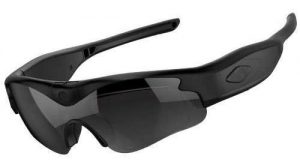
Click here for the official daVideo Camera Sunglasses
What Are Camera Glasses Without AI?
Camera glasses without AI are essentially wearable cameras designed primarily for recording.
Instead of functioning as a complete smart assistant, the glasses focus on camera-related features such as:
- Video recording
- POV recording
- Hands-free operation
- Photos
- Audio recording
- Storage
- Battery life
- Camera positioning
- Wide-angle coverage
The goal is straightforward.
Put the glasses on.
Start recording.
Go about your activity.
The camera captures the experience from your perspective.
For someone who doesn’t need an AI assistant built into their glasses, that simplicity can be a significant advantage.
You Don’t Need AI to Record Great Video
One of the biggest misconceptions surrounding modern cameras is that you need artificial intelligence to create good video.
You don’t.
Great video has been produced for decades without AI.
The things that matter most include:
- Good lighting
- Camera positioning
- Composition
- Lens coverage
- Stability
- Resolution
- Frame rate
- Audio
- Interesting subjects
- Good storytelling
AI can certainly help with some aspects of content creation.
But it doesn’t replace the fundamentals of recording.
If you’re wearing camera glasses while working on a car, walking through a city, traveling, building something or enjoying an event, the most important thing is still capturing the experience.
You don’t need an AI assistant to do that.
Sometimes You Just Want a Camera
Imagine you want to record a project you’re working on.
You put on your camera glasses.
You press the record button.
You work.
That’s it.
You don’t necessarily need to:
- Ask an AI question
- Get voice responses
- Make phone calls
- Use a virtual assistant
- Search for information through your glasses
- Connect to numerous smart services
You just want video.
That’s where dedicated camera glasses make sense.
They can provide a purpose-built solution for someone whose priority is recording rather than having another smart device on their face.
Simplicity Can Make Technology Easier to Use
More features aren’t automatically better.
Every additional feature can introduce another setting, menu, account, connection or configuration.
A device with dozens of capabilities may require more time to learn.
A simpler device can be easier to understand.
That’s particularly important for camera glasses.
You don’t want to spend five minutes figuring out how to start recording when something interesting is happening right now.
You want the camera to be ready when you are.
The simple approach:
Put them on → Start recording → Capture the moment.
That’s an appealing workflow for many people.
Fewer Features Can Mean Fewer Distractions
Smart devices are designed to keep you connected.
That’s useful in many situations.
But sometimes you want to disconnect.
When you’re traveling, enjoying an event or working on a project, you may not want your glasses constantly functioning as another communication device.
Dedicated camera glasses can provide a different experience.
They can be about capturing what you’re doing without turning your eyewear into another smartphone.
The purpose is simple:
Record the experience instead of interacting with technology.
Camera Glasses Can Be About the Camera
When you’re shopping for a wearable camera, it makes sense to concentrate on the features that affect your video.
Instead of asking:
“What AI features does this have?”
You can ask:
“How good is the camera?”
Then consider the specifications that actually affect your recordings.
Look at the lens
A wide-angle lens can help capture more of your surroundings.
Look at the resolution
Higher resolution can provide more image detail.
Look at the frame rate
Different frame rates can be useful for different types of motion.
Look at storage
More storage can allow you to record longer before transferring or replacing files.
Look at battery life
Longer battery life can be important when recording throughout the day.
Look at camera positioning
The position and angle of the camera can have a major effect on your POV footage.
These are the specifications that directly affect your recordings.
Why Pay for Features You Don’t Need?
One of the biggest reasons to consider dedicated camera glasses is value.
If you’re primarily interested in recording video, you may not want to spend additional money on features you aren’t going to use.
Think about buying a smartphone.
You might use it for photography, navigation, texting, social media and hundreds of other things.
But imagine buying a specialized camera.
You aren’t necessarily paying for a phone.
You’re paying for a camera.
The same basic principle can apply to camera glasses.
If your primary goal is video recording, a dedicated wearable camera can be a logical choice.
Dedicated Camera Glasses vs. AI Smart Glasses
The difference isn’t necessarily about which technology is “better.”
It’s about what you’re trying to accomplish.
| Feature | Dedicated Camera Glasses | AI Smart Glasses |
|---|---|---|
| Video recording | Primary purpose | One feature |
| POV recording | Strong focus | Available |
| Hands-free video | Yes | Yes |
| AI assistant | Typically not the focus | Major feature |
| Voice interaction | Model dependent | Common feature |
| Phone integration | May be limited | Often extensive |
| Audio features | Recording-focused | Often broader |
| Simplicity | Generally simpler | More complex |
| Smart features | Limited | Extensive |
| Best for | Recording | Recording + smart functions |
Neither category is necessarily right for everyone.
If you want AI assistance, communication features and a connected wearable device, smart glasses can be appealing.
If you mainly want a camera you can wear, dedicated camera glasses may be the better match.
Privacy Is Another Reason Some People Prefer Simpler Devices
Privacy is becoming an increasingly important consideration with wearable technology.
Some people simply don’t want another connected device listening for voice commands or interacting with online services.
A dedicated camera device can provide a more straightforward experience.
Of course, any camera can raise privacy considerations, regardless of whether it has AI.
You should always respect local laws, private-property rules and people’s reasonable expectations of privacy when recording.
But there is a difference between a device designed primarily to record video and a wearable designed to combine cameras, microphones, AI services and communications.
For people who want to minimize unnecessary connected technology, a simpler camera can be appealing.
You Already Have AI in Your Pocket
Here’s another reason you may not need AI built into your glasses.
You probably already have access to powerful AI through your smartphone or computer.
If you need an AI assistant, you can use one.
If you need directions, your phone can provide them.
If you need to search for something, your phone can do it.
If you need to edit your video, your computer or smartphone can handle it.
So why make your camera glasses another general-purpose smart device?
For some people, it makes more sense to divide the jobs.
Your phone handles smart functions.
Your camera glasses handle recording.
Each device has a clear purpose.
Keep the Camera and Phone Separate
There can be a practical advantage to separating your recording device from your smartphone.
When your phone is your camera, you may have to:
- Hold it
- Mount it
- Set it somewhere
- Keep it charged
- Monitor the screen
- Worry about dropping it
Camera glasses eliminate much of that inconvenience.
You can wear them while keeping your hands available.
Your phone can remain in your pocket.
The glasses record from your perspective.
That’s the entire appeal of wearable POV cameras.
Camera Glasses Are Great for Hands-Free Recording
Hands-free recording is one of the biggest reasons to own camera glasses in the first place.
Consider how difficult some activities would be to record with a smartphone.
Working on a car
Both hands are busy with tools.
Building furniture
You’re assembling parts and using tools.
Cooking
Your hands are preparing food.
Hiking
You’re using your hands for balance or equipment.
Traveling
You’re carrying luggage or exploring.
DIY projects
You need both hands to complete the project.
Camera glasses allow the camera to follow your perspective without requiring you to hold it.
And you don’t need AI to make that useful.
Simpler Can Be Better for Beginners
Someone buying their first wearable camera may not want to learn a complicated ecosystem.
They may simply want to record.
That’s especially true for people who aren’t particularly interested in technology.
A straightforward camera can be less intimidating.
You don’t need to learn dozens of voice commands.
You don’t need to understand every smart feature.
You don’t need to configure everything before you can start recording.
You can concentrate on the actual video.
Simpler Can Be Better for Content Creators
Content creators often use multiple devices.
A creator might already have:
- A smartphone
- A mirrorless camera
- An action camera
- A computer
- Editing software
- Microphones
- Lighting equipment
Adding another device doesn’t necessarily mean that it needs to duplicate everything else.
Camera glasses can fill a specific role:
POV footage.
That’s valuable because POV footage can be difficult to reproduce with conventional cameras.
A camera mounted on your face gives the audience your perspective.
That can add variety to YouTube videos, social media content, tutorials, reviews and behind-the-scenes footage.
POV Footage Doesn’t Need AI to Be Interesting
Think about what makes a POV video compelling.
It might be:
- A mechanic repairing an engine
- A woodworker building furniture
- A traveler exploring a new city
- A hiker walking a trail
- A photographer working at an event
- A creator demonstrating a product
- Someone restoring an old vehicle
- A hobbyist showing how something works
The interesting part is the experience.
AI isn’t what makes those moments interesting.
The camera simply needs to capture them effectively.
The Importance of Lens Coverage
One feature worth paying attention to when shopping for camera glasses is the lens field of view.
A wide-angle lens can capture more of the environment around you.
For example, a 110° wide-angle lens can provide useful coverage for POV video.
That’s particularly helpful because camera glasses aren’t handheld.
You aren’t constantly looking at an LCD screen to make sure everything is framed perfectly.
A wider field of view gives you more flexibility.
This is one example of why camera specifications can matter more than smart features when your primary goal is recording.
Storage Matters Too
Another camera-focused specification is storage.
If you’re recording long POV videos, storage capacity becomes important.
A camera with removable microSD storage can also provide flexibility because you can carry additional memory cards.
For example, instead of stopping after filling the card, you can swap in another card and continue recording, depending on the camera’s supported capacity and recording limitations.
Again, this has nothing to do with AI.
It’s simply a feature that directly affects your ability to record.
Battery Life Matters More Than AI Features If You’re Recording
Imagine you’re going on an all-day trip.
You want to record throughout the day.
Battery life suddenly becomes much more important than whether your glasses can answer trivia questions.
For camera users, the practical priorities are different.
You may care more about:
- How long you can record
- How quickly the battery charges
- How much storage you have
- How easy files are to transfer
- How the camera is positioned
- How wide the lens is
- How good the video looks
These are the things that determine whether you actually get the footage you wanted.
Fewer Features Can Mean a More Focused Product
There’s a psychological advantage to having a device with a clear purpose.
When you pick up a camera, you know what it’s for.
When you put on dedicated camera glasses, the purpose is equally straightforward.
Record your perspective.
That focus can be refreshing in a world where nearly every device is trying to do everything.
Your phone is a phone.
Your computer is a computer.
Your camera glasses can simply be your wearable camera.
When AI Smart Glasses Make More Sense
Being pro-camera-glasses doesn’t mean AI smart glasses are bad.
There are plenty of people who will love the additional functionality.
AI smart glasses can make sense if you specifically want:
- AI assistance
- Voice commands
- Phone calls
- Messaging
- Music
- Connected services
- Smart notifications
- Voice interaction
- A multifunction wearable
If those features are important to you, smart glasses may be worth considering.
But if you don’t care about those features, you should also consider whether you want to pay for them.
When Dedicated Camera Glasses Make More Sense
Dedicated camera glasses may be a better fit if your primary goal is:
- Recording POV video
- Hands-free video
- Travel recording
- DIY tutorials
- Product demonstrations
- Automotive projects
- Outdoor activities
- Behind-the-scenes footage
- First-person content
- Simple operation
The important thing is matching the product to your actual needs.
daVideo: For People Who Want Camera Glasses
This is where dedicated camera glasses like daVideo can be appealing.
The attraction isn’t necessarily having the most features.
It’s having the right features for recording.
If you already have a smartphone for AI, communication, navigation and apps, your camera glasses don’t necessarily need to duplicate all of those functions.
They can serve a different purpose.
Put them on.
Record your perspective.
Capture the experience.
That’s the idea behind dedicated video camera sunglasses.
The Bottom Line: Technology Doesn’t Have to Be Complicated
Modern technology is incredibly powerful.
AI can do amazing things.
Smart glasses can perform impressive tasks.
But more technology isn’t automatically better for every person.
Sometimes you simply want a camera.
Sometimes you don’t need an AI assistant.
Sometimes you don’t want another connected device.
Sometimes you just want to press record and capture what’s happening in front of you.
That’s where camera glasses without AI can make a lot of sense.
If your priority is hands-free POV video, look at the features that actually affect your recordings: lens coverage, camera quality, storage, battery life, positioning, stabilization and ease of use.
You can let your smartphone handle the smart stuff.
Let your camera glasses handle the recording.
Sometimes simpler isn’t a compromise. Sometimes simpler is exactly what you need.
Frequently Asked Questions
Can camera glasses work without AI?
Yes. A camera can record video without artificial intelligence. Dedicated camera glasses can focus primarily on recording video and other camera-related functions.
Are camera glasses better than AI smart glasses?
It depends on what you need. AI smart glasses offer more connected features, while dedicated camera glasses can be better suited to people whose primary goal is recording hands-free POV video.
Why would someone want camera glasses without AI?
Some people want a simpler device focused on recording. They may already have a smartphone for AI assistants, apps, navigation, communication and other smart functions.
Do you need AI to make good POV video?
No. Camera quality, lighting, lens coverage, framing, stabilization, audio and the content you’re recording all contribute significantly to the quality of POV video.
Are simpler camera glasses easier to use?
They can be. A device focused primarily on recording may have fewer features and settings to learn, making the recording process more straightforward.
Are camera glasses without AI more private?
They may involve fewer connected smart features, but any device with a camera or microphone can raise privacy concerns. Always use camera glasses responsibly and follow applicable laws and rules regarding recording.
Can camera glasses replace a smartphone?
Not completely. Camera glasses and smartphones serve different purposes. Camera glasses can provide hands-free POV recording, while smartphones provide apps, communication, navigation, internet access and many other functions.
Are dedicated camera glasses good for content creators?
Yes. They can provide first-person footage that is difficult to capture with a traditional handheld camera, making them useful for tutorials, demonstrations, travel videos, behind-the-scenes footage and social media content.
Click here for the official daVideo Camera Sunglasses


Camera Glasses Without the AI: Why Simpler Can Be Better
Camera Glasses Without the AI: Why Simpler Can Be Better Smart glasses have become increasingly sophisticated. Some can answer questions, interact with your phone, provide voice assistance, take photos, record video, play audio, make calls and offer AI-powered features. That’s impressive technology. But there’s another question worth asking: Do you actually need all of those features if your main goal is recording video? For many people, the answer may be no. If […]
Why Pay for AI Features When You Just Want to Record Video?
Why Pay for AI Features When You Just Want to Record Video? AI is everywhere. It’s in smartphones, computers, cars, cameras, apps, search engines — and now, it’s becoming a major selling point for smart glasses. Modern smart glasses can offer impressive technology. Depending on the product, they may provide AI assistants, voice commands, object recognition, translations, questions and answers, smartphone integration, and other connected features. But there’s an important question consumers […]
daVideo vs. Meta Glasses: Which Is Better for Recording POV Video?
daVideo vs. Meta Glasses: Which Is Better for Recording POV Video? Point-of-view video has become one of the most engaging ways to record and share experiences. Instead of watching someone hold a camera from the outside, POV video puts the viewer directly into the action. Whether you’re traveling, walking through a new city, working on a project, attending an event, riding a bike, exploring outdoors, or creating social-media content, POV footage gives […]
110° Wide-Angle POV Video: Why Lens Coverage Matters
110° Wide-Angle POV Video: Why Lens Coverage Matters When you’re recording video from your own point of view, lens coverage matters just as much as video resolution. A camera mounted on your face doesn’t always point exactly where a traditional handheld camera would. Your head moves, your eyes move, and your body naturally changes position while you’re walking, working, traveling, or interacting with your surroundings. That’s why a 110° wide-angle POV camera […]
5 Reasons Dedicated Video Camera Sunglasses Beat Smart Glasses for Recording
5 Reasons Dedicated Video Camera Sunglasses Beat Smart Glasses for Recording Smart glasses have become one of the most talked-about wearable technologies. They can connect to your phone, play music, answer calls, provide voice assistance, and in some cases record photos and video. But if your main reason for buying glasses is recording video, do you really need a pair of smart glasses loaded with features you may never use? For many […]
Looking for a Meta Glasses Alternative? Consider Dedicated Camera Sunglasses
Looking for a Meta Glasses Alternative? Consider Dedicated Camera Sunglasses If you’ve been searching for Meta glasses alternatives, you may have noticed that many of today’s smart glasses are designed to do far more than simply record video. Modern Meta glasses combine cameras with features such as audio, microphones, AI, smartphone connectivity and other smart functions. For some people, that’s exactly what they want. But what if you don’t need all of […]
Why daVideo Camera Sunglasses Are Built for People Who Actually Want to Record
Why daVideo Camera Sunglasses Are Built for People Who Actually Want to Record There are plenty of smart glasses on the market today. Some can play music. Some can make phone calls. Some connect to your smartphone. Some offer AI assistants and other smart features. And many can record video. But there’s a big difference between glasses that happen to have a camera and camera sunglasses designed for people who actually want […]
Why You Don’t Need AI to Record Amazing POV Video
Why You Don’t Need AI to Record Amazing POV Video Artificial intelligence is everywhere. It’s built into smartphones, computers, cameras, search engines and increasingly into eyewear. Today’s smart glasses can do some impressive things. Depending on the model, they can answer questions, interact with AI assistants, play audio, make calls, connect to your smartphone and record photos and video. But here’s something worth remembering: You don’t need artificial intelligence to record great […]
Do You Really Need Smart Features in Your Camera Glasses?
Do You Really Need Smart Features in Your Camera Glasses? When shopping for camera glasses, it’s easy to get caught up in all the features. AI assistants. Voice commands. Phone calls. Speakers. Notifications. App connectivity. Bluetooth. Social media integration. And, of course, a built-in camera. Smart glasses have become increasingly sophisticated, and there’s no question that these features can be useful for some people. But here’s an important question to ask before […]
Prescription-Friendly Camera Sunglasses: What to Know Before You Buy
Prescription-Friendly Camera Sunglasses: What to Know Before You Buy If you wear prescription glasses, shopping for camera sunglasses can be a little more complicated. You aren’t just looking for a good camera. You also need to make sure the glasses work with your vision needs, fit comfortably, and still provide the recording features you’re looking for. Fortunately, you don’t necessarily have to choose between clear vision and hands-free POV video. There are […]
Why Camera Sunglasses Are Great for Hiking, Fishing, Cycling and Outdoor Adventures
Why Camera Sunglasses Are Great for Hiking, Fishing, Cycling and Outdoor Adventures The best outdoor memories aren’t always the ones you plan to record. Sometimes they happen while you’re walking down a trail. Sometimes you’re standing beside a lake when something unexpected happens. Sometimes you’re riding your bike through a beautiful stretch of countryside. Sometimes you’re exploring somewhere you’ve never been before. The problem is that traditional cameras aren’t always convenient when […]
The Advantage of Removable MicroSD Storage Over Built-In Smart-Glasses Storage
The Advantage of Removable MicroSD Storage Over Built-In Smart-Glasses Storage When you’re shopping for video camera sunglasses, it’s easy to focus on camera resolution, frame rates and lens quality. But there’s another specification that can make a huge difference in everyday use: How the video is stored. Some smart glasses rely on built-in storage. That can be convenient, but you’re ultimately limited to the storage capacity provided by the device. Dedicated camera […]
Leave A Comment