Why You Don’t Need AI to Record Amazing POV Video
Artificial intelligence is everywhere.
It’s built into smartphones, computers, cameras, search engines and increasingly into eyewear.
Today’s smart glasses can do some impressive things. Depending on the model, they can answer questions, interact with AI assistants, play audio, make calls, connect to your smartphone and record photos and video.
But here’s something worth remembering:
You don’t need artificial intelligence to record great video.
If your primary reason for buying camera glasses is to capture POV video, the most important feature isn’t necessarily the AI.
It’s the camera.
And for many people, dedicated video camera sunglasses can be a simpler, more affordable way to capture the first-person footage they actually want.
At daVideoCamera.com, the focus is on giving customers camera eyewear designed for recording.
So before spending hundreds of dollars on AI-powered smart glasses, ask yourself a simple question:
Do I really need AI to record video?
For many people, the answer is no.
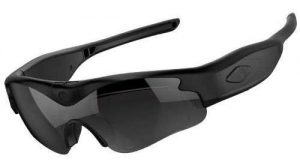
Click here for the official daVideo Camera Sunglasses
AI and Cameras Are Two Different Things
It’s easy to assume that a product with more technology must automatically produce better video.
But AI and video recording perform two completely different jobs.
The camera captures the image.
AI performs other tasks around the camera.
For example, AI can potentially help with:
- Answering questions
- Identifying objects
- Providing information
- Voice interaction
- Assistance
- Smart features
- Connected services
Those capabilities can be useful.
But none of them are required to capture a POV video.
You can record an amazing sunset without AI.
You can record a hiking trail without AI.
You can record a concert without AI.
You can record a DIY project without AI.
You can record a vacation without AI.
The camera does the recording.
Great Video Existed Long Before AI Glasses
Think about the history of photography and video.
People have been creating incredible photographs and videos for decades without artificial intelligence built into their cameras.
Professional filmmakers don’t need an AI assistant to tell them when to press record.
Photographers don’t need AI to capture a beautiful sunset.
Action-camera users don’t need AI to record a mountain bike ride.
The fundamentals of good video haven’t changed.
You still need:
- A capable camera
- Good lighting
- Interesting subjects
- Proper framing
- Stable footage
- Good timing
- An interesting perspective
AI can add useful features around those fundamentals, but it isn’t a requirement for creating compelling footage.
POV Video Is About Perspective
One of the biggest reasons people buy camera glasses is POV video.
POV means point of view.
The concept is simple:
The viewer sees approximately what you see.
That’s what makes camera glasses so interesting.
The camera is positioned on your face, so your movements naturally influence the perspective.
You don’t need AI to make that happen.
You simply need a camera.
Your Eyes Provide the Perspective
Imagine walking through a beautiful park.
You’re looking at trees, buildings, people, wildlife and scenery.
A camera attached to your glasses can capture that experience from approximately your perspective.
The camera doesn’t need to understand what you’re looking at.
It just needs to record it.
That’s one of the reasons dedicated camera sunglasses can be so appealing.
They’re focused on capturing the experience rather than trying to analyze everything around you.
You Don’t Need AI to Capture Travel Videos
Travel is one of the best uses for POV camera glasses.
Imagine walking through:
- New York City
- Las Vegas
- Chicago
- A European city
- A national park
- A beach
- A theme park
- A historic location
- A festival
- A local attraction
You can capture the experience from your perspective.
You don’t need AI to tell you that the location is interesting.
You’re already there.
The camera simply records what you see.
You Don’t Need AI to Create Social-Media Videos
Social-media creators are constantly searching for new ways to make their content more interesting.
POV video is one of those tools.
A first-person perspective can make a short video feel more immersive.
You can create:
- POV walking videos
- POV travel videos
- POV tutorials
- POV demonstrations
- POV outdoor videos
- POV automotive videos
- POV workshop videos
- POV event videos
None of those require AI.
The interesting part is the perspective.
You Don’t Need AI to Record Your Hobbies
Camera glasses can be useful for documenting everyday hobbies.
Consider someone working on a car.
They might want to show:
- Removing a component
- Installing a part
- Using a tool
- Diagnosing a problem
- Completing a repair
A POV camera can show what the person sees while working.
AI isn’t necessary.
The camera simply documents the process.
The same concept works for:
- Woodworking
- Metalworking
- Welding
- DIY projects
- Cooking
- Crafts
- Fishing
- Hiking
- Cycling
- Photography
- Electronics
Hands-Free Recording Is the Real Advantage
For many camera-glasses buyers, the biggest benefit isn’t AI.
It’s the fact that you don’t have to hold the camera.
That is an enormous advantage.
Imagine trying to work on a project while holding a smartphone.
It’s awkward.
You have to constantly reposition the phone.
You may need a tripod.
You may need someone else to record.
Camera glasses eliminate much of that inconvenience.
You wear them.
You look at the project.
You record.
Your hands remain free.
AI Doesn’t Make Your Hands Free
This is an important distinction.
AI can make a device smarter.
It doesn’t necessarily make the camera more useful for your particular activity.
If you’re working with both hands, what you really need is a camera that you don’t have to hold.
That’s where wearable camera glasses shine.
The value comes from the form factor.
You Already Have AI in Your Phone
There’s another reason you may not need AI in your glasses.
You probably already have access to AI through your smartphone.
Your phone can provide:
- AI assistants
- Internet search
- Maps
- Translation
- Messaging
- Social media
- Voice assistants
- Photography
- Video editing
So if you already have a smartphone in your pocket, do you really need to pay extra to put another AI system in your sunglasses?
For some people, absolutely.
For others, there’s little benefit.
Keep Your Smart Device and Your Camera Separate
There’s nothing wrong with having specialized devices.
In fact, many people prefer them.
Your smartphone can be your:
Smart device.
Your camera glasses can be your:
Wearable camera.
Your mirrorless camera can be your:
Professional camera.
Your action camera can be your:
Adventure camera.
Each device has a job.
They don’t all need to do everything.
More Features Don’t Automatically Mean Better Video
This is one of the most important things to understand when comparing camera glasses.
A product can have dozens of features and still not produce better footage for your particular use.
Imagine comparing two products.
Camera A
- Excellent camera
- Simple operation
- Long recording capability
- Affordable
Camera B
- Camera
- AI
- Speakers
- Voice assistant
- Phone calls
- Notifications
- Connected services
- More expensive
Which one is better?
If you’re evaluating video recording, you should compare the cameras.
Not the number of features.
What Actually Makes POV Video Look Good?
If you want amazing POV video, focus on the things that actually affect the footage.
1. Lighting
Good lighting can make a huge difference.
Bright, even lighting generally gives a camera more information to work with.
Outdoor daylight can be particularly useful for camera glasses.
2. Camera Resolution
Higher resolution can capture more detail.
3. Frame Rate
Frame rate affects how motion is recorded.
Different types of content can benefit from different frame rates.
4. Stability
Nobody enjoys watching extremely shaky footage.
How you move your head and how the camera handles motion can affect the final result.
5. Perspective
POV video is inherently interesting because the camera is positioned where the viewer expects your eyes to be.
6. Subject Matter
A fascinating experience will generally be more interesting than a boring one, regardless of how much AI is built into the camera.
7. Storytelling
Good video isn’t just about specifications.
It’s about what happens in front of the lens.
The Camera Still Does the Important Work
When you press record, the camera is what captures the scene.
It records:
- Light
- Color
- Motion
- Sound
- Perspective
- Detail
AI may be able to analyze or enhance certain aspects of a device’s operation, but the fundamental job of recording the scene still belongs to the camera.
That’s why camera specifications matter so much.
What Should You Look for Instead of AI?
If you’re shopping specifically for POV camera glasses, concentrate on features related to recording.
Look at:
Video Resolution
What resolution does the camera record?
Frame Rate
What frame rates are available?
Storage
How much footage can the glasses store?
Battery
How long can you record?
Camera Placement
Where is the camera positioned?
Microphones
If audio matters to you, examine the microphone setup.
Ease of Operation
Can you easily start and stop recording?
Comfort
You’re wearing the glasses, so comfort matters.
File Transfer
How easy is it to move your videos to your computer or phone?
These specifications are much more relevant if your primary goal is recording POV video.
Why Dedicated Camera Glasses Can Make Sense
Dedicated camera sunglasses are built around a straightforward idea:
Put a camera in your eyewear.
That simplicity can be an advantage.
You don’t necessarily need your sunglasses to:
- Answer questions
- Play music
- Make phone calls
- Run an AI assistant
- Send messages
You may simply want them to:
Record.
And that’s perfectly reasonable.
You Don’t Need AI to Record a Sunset
Consider one of the simplest examples.
You’re standing on a beach.
The sun is setting.
The sky is turning orange and red.
You want to capture the moment.
What do you need?
A camera.
You don’t need AI to understand that the sunset is beautiful.
You don’t need an assistant to explain the sunset.
You don’t need a voice assistant to tell you to press record.
You simply want to capture it.
That’s where a camera-first approach makes sense.
You Don’t Need AI to Record a Concert
The same applies to concerts and live events.
You’re watching your favorite performer.
You want to capture part of the experience.
The important things are:
- The camera
- The perspective
- The lighting
- The audio
- The moment
AI isn’t what makes the experience interesting.
The event does.
Your camera simply captures it.
You Don’t Need AI to Record a Road Trip
Imagine taking a road trip through an area you’ve never visited.
You want to capture:
- The road
- The scenery
- Interesting stops
- Small towns
- Landscapes
- Attractions
A wearable camera can record the journey from your perspective.
Again, the value comes from the camera being with you.
Not from artificial intelligence.
You Don’t Need AI to Create a Tutorial
If you’re demonstrating how to use a tool, repair something or build a project, your viewers don’t necessarily care whether your glasses have an AI assistant.
They care about seeing what you’re doing.
POV video can put them right into the process.
That’s the important feature.
Dedicated Camera Sunglasses Can Be More Affordable
Another major reason to consider dedicated camera glasses is price.
Premium smart glasses can cost several hundred dollars.
If you don’t need the AI and connected features, you may prefer to spend substantially less on a camera-focused product.
daVideoCamera offers camera glasses at multiple price points, including affordable models and more advanced options such as the Denali.
That allows shoppers to select a product based on their camera needs and budget.
Why Pay for AI You Don’t Use?
This is the question every shopper should ask.
If you use AI every day through your glasses, the additional cost may be worth it.
But if you never use it, why pay for it?
Technology should provide value.
You shouldn’t feel obligated to purchase a collection of features simply because they’re available.
If all you want is a camera, consider buying a camera.
AI Is Useful—But It’s Not Required
It’s important to be clear:
This isn’t an argument that AI is bad.
AI can be incredibly useful.
There are people who will love having an AI assistant built into their glasses.
There are people who will use voice commands constantly.
There are people who want audio, connectivity and smart features.
For those people, smart glasses can be an excellent choice.
The point is simply that AI is optional when your main objective is recording video.
A Simpler Product Can Sometimes Be the Smarter Choice
There’s an interesting contradiction in technology.
Sometimes the “smartest” purchase isn’t the product with the most technology.
It’s the product that gives you exactly what you need without unnecessary extras.
If you’re shopping for camera glasses because you want POV video, a dedicated camera product can be a very logical choice.
You get the camera.
You get the wearable form factor.
You get hands-free recording.
And you can potentially spend much less.
daVideo Camera Glasses: Camera First
daVideoCamera is focused on camera eyewear for customers who want to capture photos and video while wearing their camera.
That’s particularly attractive for people who don’t want their glasses to become another complicated smart device.
Whether you’re interested in:
- POV video
- Travel
- Outdoor activities
- DIY projects
- Automotive work
- Tutorials
- Events
- Social-media content
- Everyday recording
a dedicated video camera can give you a simple way to capture your perspective.
The daVideo Denali
If you’re looking for a more advanced camera-glasses option, the daVideo Denali is worth considering.
The Denali provides a more capable camera-focused solution for people who want to capture hands-free video while still staying at a price point well below many premium smart-glasses products.
For someone who wants a wearable camera rather than a wearable computer, that distinction can be important.
Think About What You Will Actually Use
Before buying any smart glasses, make a list.
Write down the features you actually expect to use.
For example:
Camera
Video
Photos
POV recording
Hands-free operation
Storage
Battery
If that’s your entire list, you may not need a complicated smart-glasses platform.
Now add:
AI
Music
Phone calls
Voice assistant
Notifications
Smartphone integration
If those are important to you, smart glasses may be the better choice.
Smart Glasses vs. Dedicated Camera Glasses
Here’s the simplest comparison:
| Feature | Smart Glasses | Dedicated Camera Glasses |
|---|---|---|
| Video recording | Yes | Yes |
| POV video | Yes | Yes |
| Photos | Yes | Yes |
| Hands-free operation | Yes | Yes |
| AI | Often | Usually not the focus |
| Audio | Often | Depends on model |
| Phone calls | Often | Usually not the focus |
| Smartphone integration | Often | Varies |
| Primary purpose | Multifunction wearable | Wearable camera |
| Cost | Often higher | Often lower |
| Simplicity | More features | Camera-focused |
The winner depends entirely on what you need.
Who Should Buy Smart Glasses?
Smart glasses are worth considering if you want:
- AI assistance
- Audio
- Phone calls
- Voice controls
- Smartphone integration
- Connected services
- A camera combined with smart features
If those features are important to you, the additional cost may be worthwhile.
Who Should Buy Dedicated Camera Glasses?
Dedicated camera glasses are worth considering if you primarily want:
- POV video
- Hands-free recording
- Photos
- A wearable camera
- Simple operation
- An affordable recording solution
If you don’t need AI, there may be little reason to make AI a deciding factor.
The Bottom Line
You don’t need artificial intelligence to record amazing POV video.
You need a camera.
You need an interesting perspective.
You need good lighting.
You need a compelling subject.
You need to know when to press record.
And most importantly, you need a camera that you’re actually willing to wear and use.
That’s where dedicated camera sunglasses can make a lot of sense.
Instead of paying for a complete smart-glasses ecosystem, you can choose a camera-focused product designed around what you actually want to do.
Record video.
Take photos.
Capture POV footage.
Keep your hands free.
AI can be an excellent feature.
But it isn’t a requirement for great video.
Before spending hundreds of dollars on smart glasses, ask yourself what you’re really buying them for.
If the answer is:
“I want to record what I see.”
Then you may not need AI at all.
You may simply need a good camera that you can wear.
And that’s exactly why dedicated video camera sunglasses from daVideoCamera deserve a place on your list when you’re comparing smart glasses, Meta glasses and wearable cameras.
Click here for the official daVideo Camera Sunglasses


Why You Don’t Need AI to Record Amazing POV Video
Why You Don’t Need AI to Record Amazing POV Video Artificial intelligence is everywhere. It’s built into smartphones, computers, cameras, search engines and increasingly into eyewear. Today’s smart glasses can do some impressive things. Depending on the model, they can answer questions, interact with AI assistants, play audio, make calls, connect to your smartphone and record photos and video. But here’s something worth remembering: You don’t need artificial intelligence to record great […]
Do You Really Need Smart Features in Your Camera Glasses?
Do You Really Need Smart Features in Your Camera Glasses? When shopping for camera glasses, it’s easy to get caught up in all the features. AI assistants. Voice commands. Phone calls. Speakers. Notifications. App connectivity. Bluetooth. Social media integration. And, of course, a built-in camera. Smart glasses have become increasingly sophisticated, and there’s no question that these features can be useful for some people. But here’s an important question to ask before […]
Prescription-Friendly Camera Sunglasses: What to Know Before You Buy
Prescription-Friendly Camera Sunglasses: What to Know Before You Buy If you wear prescription glasses, shopping for camera sunglasses can be a little more complicated. You aren’t just looking for a good camera. You also need to make sure the glasses work with your vision needs, fit comfortably, and still provide the recording features you’re looking for. Fortunately, you don’t necessarily have to choose between clear vision and hands-free POV video. There are […]
Why Camera Sunglasses Are Great for Hiking, Fishing, Cycling and Outdoor Adventures
Why Camera Sunglasses Are Great for Hiking, Fishing, Cycling and Outdoor Adventures The best outdoor memories aren’t always the ones you plan to record. Sometimes they happen while you’re walking down a trail. Sometimes you’re standing beside a lake when something unexpected happens. Sometimes you’re riding your bike through a beautiful stretch of countryside. Sometimes you’re exploring somewhere you’ve never been before. The problem is that traditional cameras aren’t always convenient when […]
The Advantage of Removable MicroSD Storage Over Built-In Smart-Glasses Storage
The Advantage of Removable MicroSD Storage Over Built-In Smart-Glasses Storage When you’re shopping for video camera sunglasses, it’s easy to focus on camera resolution, frame rates and lens quality. But there’s another specification that can make a huge difference in everyday use: How the video is stored. Some smart glasses rely on built-in storage. That can be convenient, but you’re ultimately limited to the storage capacity provided by the device. Dedicated camera […]
Meta Glasses Alternatives: 10 Things to Consider Before You Buy
Meta Glasses Alternatives: 10 Things to Consider Before You Buy If you’ve been searching for Meta glasses alternatives, you’ve probably already discovered that there are a lot of different camera glasses and wearable cameras available. Some are designed as smart glasses. Some focus primarily on photography. Some are built around AI. Others are designed specifically for hands-free video recording. That can make choosing the right pair surprisingly difficult. Before you buy a […]
Why Interchangeable Lenses Matter When Choosing Video Camera Sunglasses
Why Interchangeable Lenses Matter When Choosing Video Camera Sunglasses When shopping for video camera sunglasses, most people immediately look at the camera resolution, battery life, storage capacity, and recording time. Those specifications are important, but there is another feature that can make a major difference in how useful your camera sunglasses are: interchangeable lenses. Being able to change the lenses can make a pair of video camera sunglasses much more versatile for […]
daVideo Camera Sunglasses vs. Meta: Which Is Better for Long Recording Sessions?
daVideo Camera Sunglasses vs. Meta: Which Is Better for Long Recording Sessions? If you want to record hands-free video for more than just a few quick clips, the type of camera glasses you choose can make a big difference. daVideo camera sunglasses and Meta smart glasses are designed with different priorities in mind. Meta glasses combine a camera with smart features such as audio, voice interaction and smartphone connectivity. daVideo camera sunglasses […]
Why Choose Dedicated Video Camera Sunglasses Instead of Meta Glasses?
Why Choose Dedicated Video Camera Sunglasses Instead of Meta Glasses? Smart glasses have become one of the most talked-about wearable technologies in recent years. Meta glasses have helped bring camera-equipped eyewear into the mainstream, giving people a convenient way to take photos, record video, listen to audio, and use AI features without reaching for their phone. But there is an important question that many shoppers should ask before spending several hundred dollars: […]
Finding the Perfect Seat for Stunning Videos on Kings Island Rides
Finding the Perfect Seat for Stunning Videos on Kings Island Rides Picking the wrong seat on Kings Island rides can turn your video footage from thrilling to forgettable. You want the best camera angles that capture every twist, drop, and turn in crisp detail. This guide reveals the optimal seating positions to help you film the most striking attraction views, from front-row seats that put you right in the action to middle […]
How to Use Gimbals and Camera Settings for Perfect Kings Island Footage
Ride Filming Tips: How to Use Gimbals and Camera Settings for Perfect Kings Island Footage Capturing smooth footage on fast-moving Kings Island rides feels impossible if you don’t know the right tricks. Shaky, blurry videos can ruin the thrill you want to share with friends. This guide breaks down simple ride filming tips, from gimbal use to camera settings, so your footage stays steady and exciting. Keep reading to learn how to […]
Capture Your Kings Island Adventure
Filming at Amusement Parks: Capture Your Kings Island Adventure Most people think capturing a day at Kings Island means endless footage that never gets watched. The truth is, short-form videos win attention when you know the right moves. With the right Kings Island video tips and short-form video strategies, you can turn thrilling rides, tasty food, and fun moments into clips that pop on social media. Ready to film at amusement parks […]
Leave A Comment