Why Pay for AI Features When You Just Want to Record Video?
AI is everywhere.
It’s in smartphones, computers, cars, cameras, apps, search engines — and now, it’s becoming a major selling point for smart glasses.
Modern smart glasses can offer impressive technology. Depending on the product, they may provide AI assistants, voice commands, object recognition, translations, questions and answers, smartphone integration, and other connected features.
But there’s an important question consumers should ask before buying:
Why pay extra for AI features if all you really want to do is record video?
If your primary reason for buying camera glasses is to capture hands-free POV video, you may not need an AI-powered wearable computer.
You may simply need a good camera that happens to be built into a pair of glasses.
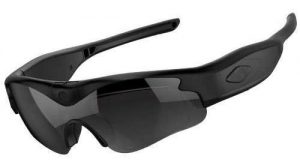
Click here for the official daVideo Camera Sunglasses
AI Is Impressive — But Is It Something You Need?
There’s nothing wrong with AI.
For some people, AI features can be extremely useful.
Being able to ask a device a question, get information, interact with an assistant, or perform certain tasks without reaching for a phone can be convenient.
But convenience and necessity are two different things.
If you are shopping for camera glasses because you want to:
- Record video
- Capture POV footage
- Take photos
- Document trips
- Record outdoor adventures
- Create social media videos
- Capture family memories
- Record hands-free
then AI may not be high on your list of priorities.
The camera is what you actually want.
You’re Buying Camera Glasses for the Camera
Think about why you started looking for camera glasses in the first place.
Maybe you saw someone recording a first-person video without holding a camera.
Maybe you want to record your motorcycle rides.
Maybe you want hands-free video while fishing.
Maybe you want to document hiking trips.
Maybe you create YouTube videos or social media content.
Maybe you simply want an easier way to capture everyday moments.
In each of those situations, the central feature is the same:
You want to record.
That means the camera itself deserves more attention than a long list of unrelated smart features.
What Actually Matters for Recording Video?
If recording is your primary goal, there are many specifications that can matter more than AI.
Camera Resolution
Resolution determines how much detail the recorded video can contain.
Depending on the camera, you may encounter specifications such as 1080p, 2K, 4K, or other resolutions.
But resolution is only one part of overall image quality.
Field of View
Field of view determines how much of the scene the camera captures.
A wider field of view can be particularly useful for POV video because you want to capture more of what you’re experiencing.
Camera Position
Camera placement is extremely important for wearable cameras.
A camera mounted directly on your glasses can provide a natural first-person perspective.
Frame Rate
Frame rate can affect how motion appears in your recordings.
Different activities may benefit from different frame rates.
Stabilization
If you’re walking, cycling, riding, or participating in action activities, stabilization can potentially make footage easier to watch.
Storage
If you’re recording lots of video, storage can become extremely important.
Battery Life
A camera that runs out of battery halfway through your trip can’t record the rest of it.
These are the features you should be looking at if recording is your main objective.
AI Doesn’t Make a Camera Lens Better
This is worth remembering.
An AI assistant can recognize something in an image.
It can answer questions.
It can potentially help organize information.
But AI doesn’t automatically make the physical camera lens better.
It doesn’t automatically give the camera a wider field of view.
It doesn’t automatically provide more storage.
It doesn’t automatically make the battery last longer.
And it doesn’t automatically make the glasses more comfortable.
Those are separate characteristics.
If you’re primarily buying camera glasses to record video, don’t let an impressive AI feature list distract you from evaluating the actual recording hardware.
The Camera Is What Creates the POV Footage
The reason camera glasses are interesting in the first place is their perspective.
A traditional camera might be:
- Handheld
- Mounted on a tripod
- Attached to a vehicle
- Mounted to a helmet
- Worn on your chest
Camera glasses provide another option.
The camera follows your head and records approximately what you’re looking toward.
That creates a unique first-person perspective.
AI isn’t what creates that perspective.
The camera placement does.
You Already Own a Powerful AI Device
There’s another question worth asking:
Do you already have AI in your pocket?
For most people, the answer is yes.
Modern smartphones can already provide access to AI tools, voice assistants, internet searches, translation, navigation, image recognition, and countless apps.
So if you’re already carrying a smartphone, do you need another AI device attached to your face?
Some people will say yes.
Others will say no.
If you fall into the second group, dedicated camera glasses may make more sense.
Your Phone Can Handle the Smart Stuff
There’s nothing stopping you from using camera glasses and your smartphone together.
Your glasses can record the video.
Your smartphone can handle everything else.
For example:
Camera glasses: Record POV video.
Smartphone: Edit the video.
Smartphone: Add music.
Smartphone: Upload to social media.
Smartphone: Use AI to write a caption.
Smartphone: Store or share the finished video.
This can be a very simple workflow.
You don’t necessarily need to duplicate every smartphone feature inside your glasses.
More Features Don’t Always Mean More Value
This is one of the biggest traps when buying technology.
Consumers naturally assume:
More features = better product.
But that’s not always true.
Imagine two pairs of camera glasses.
One has:
- AI assistant
- Voice commands
- Calls
- Music
- Notifications
- Smartphone integration
- Camera
The other focuses primarily on:
- Camera
- Video recording
- Storage
- Battery
- Physical recording controls
- Comfortable eyewear
Which is better?
There isn’t one universal answer.
The first may be better if you want a connected wearable device.
The second may be better if you primarily want to record video.
The right choice depends on what you actually plan to use.
You’re Not Saving Money by Paying for Features You Don’t Use
This is where the value question becomes important.
Suppose you’re buying camera glasses specifically to record your motorcycle rides.
Do you really need AI?
Maybe not.
Do you need phone calls through your glasses?
Maybe not.
Do you need music?
Maybe not.
Do you need notifications?
Probably not while you’re riding.
But you might care deeply about:
- Camera quality
- Field of view
- Recording time
- Storage
- Physical controls
- Lens quality
- Comfort
- Battery life
Those are the features that directly affect your intended use.
What About Content Creators?
Content creators should pay particularly close attention to this distinction.
If your camera glasses are primarily being used to generate content, the recording itself is the product.
You might use your glasses to create:
- YouTube videos
- TikTok videos
- Facebook Reels
- Instagram Reels
- Travel videos
- Fishing videos
- Motorcycle content
- Hiking videos
- DIY videos
- Behind-the-scenes footage
For these applications, camera performance can matter much more than whether the glasses can answer questions.
The footage is what your audience sees.
Storage Can Be More Valuable Than AI
Imagine you’re spending an entire day filming.
You’ve recorded dozens of clips.
You’re still out filming.
What do you need?
More AI features?
Or more storage?
For someone focused on recording, storage can be significantly more useful.
This is particularly true for people who record long sessions or capture lots of short clips.
If a camera sunglasses model supports removable microSD storage, that can provide additional flexibility because you can carry extra cards and transfer recordings as needed.
Always check the storage specifications of the exact model you’re considering.
Battery Life Can Be More Important Than AI
The same concept applies to battery life.
If you’re recording an outdoor adventure, the battery determines how long the camera can actually operate.
Imagine you’re hiking for several hours.
You want to record the best part of the trail.
If the camera battery dies before you get there, all the other features become irrelevant.
That’s why recording-focused shoppers should pay close attention to battery capacity and realistic recording time.
Physical Recording Buttons Can Beat Voice Commands
If you simply want to record, a physical button can be extremely convenient.
Press the button.
Start recording.
Press it again.
Stop recording.
No voice command required.
This can be particularly useful in:
- Windy conditions
- Loud environments
- Concerts
- Motorcycle riding
- Construction areas
- Workshops
- Sporting events
- Outdoor adventures
You also don’t have to talk to your glasses in front of other people.
For many users, that’s a worthwhile advantage.
Vibration Alerts Can Also Matter
Some camera glasses provide tactile or vibration feedback when recording starts or stops.
This can be useful because you’re wearing the camera on your face.
You don’t necessarily want to stare at a screen to determine whether recording started.
A physical button combined with a tactile recording confirmation can provide a straightforward user experience.
Again, these are recording-specific features.
And if recording is your primary purpose, they may be more important to you than AI.
What About Privacy?
Privacy is another reason some consumers may prefer a simpler camera-focused product.
Connected smart devices can involve apps, accounts, wireless connections, cloud services, voice assistants, and other technologies.
The specific privacy implications vary by product.
If you don’t want additional connected functionality, you may prefer a camera that can operate more independently.
That doesn’t mean every AI smart-glasses product is inherently bad for privacy.
It simply means privacy and connectivity are worth considering when choosing wearable technology.
Do You Really Need Your Glasses to Be a Computer?
This is perhaps the simplest way to look at the issue.
Ask yourself:
Do I want my glasses to be a computer?
Or:
Do I want my glasses to be a camera?
Those are two different products.
Smart glasses attempt to combine multiple functions into one wearable device.
Dedicated camera glasses can focus primarily on recording.
Neither approach is automatically better.
But knowing which experience you want can make the buying decision much easier.
When AI Features Are Actually Worth Paying For
There are situations where AI features can absolutely be worth the extra cost.
Smart glasses may be attractive if you specifically want:
- An AI assistant
- Voice interaction
- Real-time information
- Translation features
- Object or scene recognition
- Hands-free questions
- Phone calls
- Music
- Notifications
- Smartphone integration
If you’ll use those features regularly, they may justify paying more.
The key is usefulness.
Don’t pay for AI simply because the product says it has AI.
Pay for it if AI provides something you genuinely want.
When AI May Not Be Worth Paying For
On the other hand, AI may be unnecessary if your main goals are:
- Recording video
- Taking photos
- Creating POV footage
- Recording outdoor activities
- Documenting hobbies
- Recording family events
- Creating social media content
- Capturing travel experiences
- Hands-free recording
In those situations, the camera and recording system should be your primary focus.
Camera Glasses for Outdoor Adventures
Consider someone going fishing.
They want to capture the experience from their perspective.
They’re interested in recording the cast, the strike, the fight, and the scenery.
What features are most important?
Probably:
- Camera quality
- POV perspective
- Storage
- Battery life
- Comfortable fit
- Lens protection
- Recording controls
They probably aren’t buying the glasses because they want an AI assistant.
The same applies to hiking.
Or cycling.
Or traveling.
Or documenting DIY projects.
The camera is the reason they’re wearing the glasses.
Camera Glasses for Motorcycle Riders
Motorcycle riders provide another excellent example.
The rider wants to capture a first-person view of the road and the ride.
The priority list might include:
- Camera position
- Field of view
- Video quality
- Battery life
- Storage
- Physical controls
- Lens protection
- Comfortable fit
- Compatibility with riding equipment
AI may be completely irrelevant to the actual purpose.
And riders should always prioritize safe operation and appropriate protective gear over recording.
Camera Glasses for DIY and Work
Imagine working on a project where both hands are occupied.
You want to document the process.
Holding a smartphone isn’t practical.
A camera mounted to your glasses can provide a natural hands-free perspective.
Again, the important feature is the camera.
You aren’t necessarily looking for an AI assistant.
You’re looking for a camera that follows your point of view.
What About the Cost of Smart Features?
The actual pricing difference between products varies significantly, so consumers should compare current prices and specifications rather than assuming a fixed premium.
But the underlying principle remains:
Compare the features you will use.
If one product costs more because it includes a large collection of smart functions you don’t care about, don’t automatically assume you’re getting a better deal.
A less complicated product may provide better value for your specific needs.
Why daVideo Camera Sunglasses Can Make Sense
This is where dedicated camera sunglasses can appeal to a specific type of customer.
If you’re looking for glasses primarily because you want to record video, you can concentrate on the features that directly affect your recording experience.
Look at:
- Camera resolution
- Field of view
- Camera positioning
- Storage
- Battery life
- Recording controls
- Recording alerts
- Lens options
- Comfort
- Ease of use
Instead of paying attention primarily to how many smart functions the glasses have, ask how well they perform the job you actually want them to do.
Record video.
A Better Way to Compare Camera Glasses
Instead of asking:
“Which glasses have the most features?”
ask:
“Which glasses have the features I need?”
That’s a much better buying question.
Make a list before you shop.
If your list contains:
- Good video quality
- Natural POV perspective
- Long enough battery life
- Plenty of storage
- Comfortable fit
- Easy recording controls
- Appropriate lenses
then use that list to compare products.
If AI isn’t on the list, there’s no reason to make AI the deciding factor.
Final Thoughts
AI is an exciting technology.
But exciting doesn’t always mean necessary.
If you want smart glasses that can act as a connected wearable assistant, AI features can provide real value.
But if you primarily want to record video, you don’t necessarily need an AI-powered device attached to your face.
You need a good camera.
You need useful storage.
You need sufficient battery life.
You need comfortable eyewear.
You need an appropriate field of view.
You need easy recording controls.
And you need a product that you’ll actually want to wear.
That’s why dedicated camera sunglasses can make sense for people who want a straightforward way to capture hands-free POV video.
Don’t pay for technology simply because it’s there.
Pay for the features that actually help you accomplish what you bought the product to do.
If that goal is recording video, a camera-focused pair of glasses may be exactly what you need.
Frequently Asked Questions
Do I need AI in camera glasses?
No. AI is not required for recording video. If your primary goal is hands-free POV recording, focus on camera quality, storage, battery life, field of view, and usability.
Are camera glasses without AI worth buying?
They can be, especially if you primarily want to record video and don’t need AI assistants, voice commands, or other connected smart features.
Does AI improve video quality?
Not necessarily. Video quality depends on the camera hardware, lens, sensor, resolution, lighting, stabilization, processing, and other factors. AI may provide additional features without necessarily improving the fundamental camera hardware.
Why would I choose camera glasses instead of AI smart glasses?
If your primary goal is recording video, dedicated camera glasses may allow you to focus your budget on recording-related features instead of smart functions you may not use.
Are AI smart glasses better than dedicated camera glasses?
Not universally. AI smart glasses can be better for users who want connected features and AI assistance. Dedicated camera glasses can be better for users primarily interested in hands-free video recording.
Can I use my smartphone for AI instead?
Yes. Most modern smartphones already provide access to AI tools, voice assistants, internet services, navigation, editing apps, and many other smart functions.
What matters most when buying camera glasses?
Consider camera quality, field of view, camera positioning, storage, battery life, recording controls, lens quality, comfort, and how easily you can transfer and use your recorded footage.
Are camera glasses good for POV video?
Yes. Their primary advantage is that the camera is worn at approximately eye level, allowing you to capture a hands-free first-person perspective.
Click here for the official daVideo Camera Sunglasses


Why Pay for AI Features When You Just Want to Record Video?
Why Pay for AI Features When You Just Want to Record Video? AI is everywhere. It’s in smartphones, computers, cars, cameras, apps, search engines — and now, it’s becoming a major selling point for smart glasses. Modern smart glasses can offer impressive technology. Depending on the product, they may provide AI assistants, voice commands, object recognition, translations, questions and answers, smartphone integration, and other connected features. But there’s an important question consumers […]
daVideo vs. Meta Glasses: Which Is Better for Recording POV Video?
daVideo vs. Meta Glasses: Which Is Better for Recording POV Video? Point-of-view video has become one of the most engaging ways to record and share experiences. Instead of watching someone hold a camera from the outside, POV video puts the viewer directly into the action. Whether you’re traveling, walking through a new city, working on a project, attending an event, riding a bike, exploring outdoors, or creating social-media content, POV footage gives […]
110° Wide-Angle POV Video: Why Lens Coverage Matters
110° Wide-Angle POV Video: Why Lens Coverage Matters When you’re recording video from your own point of view, lens coverage matters just as much as video resolution. A camera mounted on your face doesn’t always point exactly where a traditional handheld camera would. Your head moves, your eyes move, and your body naturally changes position while you’re walking, working, traveling, or interacting with your surroundings. That’s why a 110° wide-angle POV camera […]
5 Reasons Dedicated Video Camera Sunglasses Beat Smart Glasses for Recording
5 Reasons Dedicated Video Camera Sunglasses Beat Smart Glasses for Recording Smart glasses have become one of the most talked-about wearable technologies. They can connect to your phone, play music, answer calls, provide voice assistance, and in some cases record photos and video. But if your main reason for buying glasses is recording video, do you really need a pair of smart glasses loaded with features you may never use? For many […]
Looking for a Meta Glasses Alternative? Consider Dedicated Camera Sunglasses
Looking for a Meta Glasses Alternative? Consider Dedicated Camera Sunglasses If you’ve been searching for Meta glasses alternatives, you may have noticed that many of today’s smart glasses are designed to do far more than simply record video. Modern Meta glasses combine cameras with features such as audio, microphones, AI, smartphone connectivity and other smart functions. For some people, that’s exactly what they want. But what if you don’t need all of […]
Why daVideo Camera Sunglasses Are Built for People Who Actually Want to Record
Why daVideo Camera Sunglasses Are Built for People Who Actually Want to Record There are plenty of smart glasses on the market today. Some can play music. Some can make phone calls. Some connect to your smartphone. Some offer AI assistants and other smart features. And many can record video. But there’s a big difference between glasses that happen to have a camera and camera sunglasses designed for people who actually want […]
Why You Don’t Need AI to Record Amazing POV Video
Why You Don’t Need AI to Record Amazing POV Video Artificial intelligence is everywhere. It’s built into smartphones, computers, cameras, search engines and increasingly into eyewear. Today’s smart glasses can do some impressive things. Depending on the model, they can answer questions, interact with AI assistants, play audio, make calls, connect to your smartphone and record photos and video. But here’s something worth remembering: You don’t need artificial intelligence to record great […]
Do You Really Need Smart Features in Your Camera Glasses?
Do You Really Need Smart Features in Your Camera Glasses? When shopping for camera glasses, it’s easy to get caught up in all the features. AI assistants. Voice commands. Phone calls. Speakers. Notifications. App connectivity. Bluetooth. Social media integration. And, of course, a built-in camera. Smart glasses have become increasingly sophisticated, and there’s no question that these features can be useful for some people. But here’s an important question to ask before […]
Prescription-Friendly Camera Sunglasses: What to Know Before You Buy
Prescription-Friendly Camera Sunglasses: What to Know Before You Buy If you wear prescription glasses, shopping for camera sunglasses can be a little more complicated. You aren’t just looking for a good camera. You also need to make sure the glasses work with your vision needs, fit comfortably, and still provide the recording features you’re looking for. Fortunately, you don’t necessarily have to choose between clear vision and hands-free POV video. There are […]
Why Camera Sunglasses Are Great for Hiking, Fishing, Cycling and Outdoor Adventures
Why Camera Sunglasses Are Great for Hiking, Fishing, Cycling and Outdoor Adventures The best outdoor memories aren’t always the ones you plan to record. Sometimes they happen while you’re walking down a trail. Sometimes you’re standing beside a lake when something unexpected happens. Sometimes you’re riding your bike through a beautiful stretch of countryside. Sometimes you’re exploring somewhere you’ve never been before. The problem is that traditional cameras aren’t always convenient when […]
The Advantage of Removable MicroSD Storage Over Built-In Smart-Glasses Storage
The Advantage of Removable MicroSD Storage Over Built-In Smart-Glasses Storage When you’re shopping for video camera sunglasses, it’s easy to focus on camera resolution, frame rates and lens quality. But there’s another specification that can make a huge difference in everyday use: How the video is stored. Some smart glasses rely on built-in storage. That can be convenient, but you’re ultimately limited to the storage capacity provided by the device. Dedicated camera […]
Meta Glasses Alternatives: 10 Things to Consider Before You Buy
Meta Glasses Alternatives: 10 Things to Consider Before You Buy If you’ve been searching for Meta glasses alternatives, you’ve probably already discovered that there are a lot of different camera glasses and wearable cameras available. Some are designed as smart glasses. Some focus primarily on photography. Some are built around AI. Others are designed specifically for hands-free video recording. That can make choosing the right pair surprisingly difficult. Before you buy a […]
Leave A Comment