UV400 Protection and Video Recording: What to Look for in Camera Sunglasses
When people shop for video camera sunglasses, they often focus on camera specifications.
How many megapixels does the camera have?
What resolution does it record?
How wide is the field of view?
How much storage does it support?
How long does the battery last?
Those are all important questions. But there is another feature that should be near the top of your list: UV protection.
After all, camera sunglasses are still sunglasses.
If you’re going to wear them outside while hiking, fishing, cycling, traveling, driving, riding a motorcycle, or recording outdoor activities, you want eyewear that provides appropriate protection from ultraviolet radiation while also giving you the recording capabilities you’re looking for.
One specification you may see when shopping for sunglasses is UV400.
But what does UV400 actually mean? And what should you look for when combining UV protection with a built-in video camera?
Let’s take a closer look.
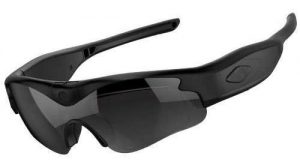
Click here for the official daVideo Camera Sunglasses
What Does UV400 Mean?
UV400 generally refers to lenses designed to block ultraviolet radiation with wavelengths up to approximately 400 nanometers.
That covers the UVA and UVB portion of ultraviolet radiation that reaches the Earth’s surface.
In simple terms, UV400 sunglasses are designed to provide broad-spectrum UV protection.
This is different from simply having dark-tinted lenses.
A lens can be dark without necessarily providing adequate UV protection.
That’s an important distinction.
The darkness of a sunglass lens and its ability to block UV radiation are two different characteristics.
Darker Does Not Necessarily Mean Better UV Protection
Many people assume that darker sunglasses automatically provide greater protection from the sun.
That’s not necessarily true.
Tint affects how much visible light reaches your eyes.
UV protection is a separate characteristic of the lens.
This means a lightly tinted lens with appropriate UV protection can provide better UV protection than a very dark lens without adequate UV filtering.
When shopping for camera sunglasses, don’t judge UV protection based solely on how dark the lenses appear.
Look for a clearly stated UV protection specification.
Why UV Protection Matters in Camera Sunglasses
Camera sunglasses can be worn for extended periods outdoors.
That’s one of the biggest advantages of the category.
Instead of holding a camera, mounting a camera to your body, or carrying a smartphone, you can wear your camera directly on your face.
This makes them useful for hands-free POV recording.
But if you’re wearing them for hours in bright sunlight, the sunglasses need to perform their basic eyewear function as well.
UV protection becomes particularly relevant for people who spend significant amounts of time outdoors.
Consider activities such as:
- Hiking
- Fishing
- Cycling
- Motorcycle riding
- Boating
- Camping
- Golf
- Traveling
- Walking
- Outdoor work
- Sporting events
- Beach trips
- Sightseeing
In all of these situations, you’re potentially spending extended periods in sunlight.
UV Protection and Outdoor POV Video
One of the biggest reasons people buy camera sunglasses is to capture a first-person perspective.
You can record what you’re seeing without holding a camera.
That can create a much more natural point of view.
Imagine hiking through a wooded trail.
Instead of stopping to pull out your phone, you can record while continuing to walk.
Or imagine fishing from a boat.
Your camera sunglasses can capture the experience from approximately your natural eye level.
The same concept works for cycling, traveling, sightseeing, and many other activities.
But because the glasses are likely to be worn for extended outdoor periods, UV protection is an important part of choosing the right pair.
UV400 Protection Doesn’t Mean the Camera Records UV
This is an important distinction.
The UV400 specification applies to the eyewear lenses, not necessarily to the camera sensor.
The purpose of UV protection is to protect the wearer’s eyes from ultraviolet radiation.
The camera is a separate component.
So when you see “UV400” listed for camera sunglasses, you should understand it primarily as an eyewear feature.
The camera’s image quality is determined by its own specifications, including its sensor, lens, exposure, processing, resolution, and other factors.
What Should You Look for in Camera Sunglasses?
If you’re shopping for camera sunglasses that you’ll actually wear outdoors, consider several characteristics rather than focusing on one specification.
1. UV400 Protection
Start with the basics.
Look for clearly stated UV protection, such as UV400.
If the manufacturer doesn’t clearly explain the UV protection provided by the lenses, don’t assume that dark lenses automatically mean adequate protection.
2. Camera Resolution
After considering the eyewear itself, look at the camera.
Depending on your intended use, you may want to consider:
- 1080p recording
- Higher-resolution recording
- Frame rate
- Image quality
- Low-light performance
- Video compression
- Stabilization
The best choice depends on what you’re recording.
3. Field of View
Field of view is especially important for POV recording.
A wider lens can capture more of the environment around you.
For example, a wide-angle camera can be useful when:
- Cycling
- Hiking
- Motorcycle riding
- Traveling
- Recording sports
- Working with your hands
- Capturing action
However, wider isn’t automatically better in every situation.
A very wide lens can introduce distortion toward the edges.
The ideal field of view depends on what you want your finished video to look like.
4. Camera Position
Camera placement is another major consideration.
Ideally, the camera should provide a natural first-person perspective.
If the camera points too high, you may capture too much sky.
If it points too low, you may capture too much of the ground.
The fit of the glasses on your face can also influence the camera’s perspective.
That’s why camera positioning matters just as much as the camera’s resolution.
5. Lens Quality
Don’t overlook the actual sunglasses lens.
The lens affects your viewing experience while wearing the glasses.
Look for lenses that provide the optical characteristics and protection appropriate for how you’ll use them.
If you’re outdoors frequently, lens quality becomes even more important.
UV Protection for Fishing
Fishing is a perfect example of why UV protection and camera functionality can work together.
Anglers can spend hours exposed to sunlight.
Water can also produce significant glare.
Camera sunglasses can provide a convenient way to record:
- Casting
- Reeling in fish
- Boat trips
- Fishing trips with friends
- Scenic views
- First-person fishing footage
But the glasses still need to function as sunglasses.
Depending on your needs, you may also want to consider polarized lenses.
Polarization can reduce certain types of glare from reflective surfaces such as water.
However, polarization and UV protection are not the same thing.
A polarized lens can also provide UV protection, but you should verify the actual specifications of the lens rather than assuming that polarization automatically means UV400.
UV Protection for Motorcycle Riders
Motorcycle riders are another group who can benefit from camera sunglasses.
Riding creates a unique combination of sunlight, wind, changing conditions, and the need for a hands-free camera.
Camera sunglasses can provide a convenient first-person perspective without requiring a camera to be mounted somewhere on the motorcycle.
However, safety should always come first.
Camera sunglasses should never interfere with your helmet, eye protection, visibility, or ability to operate the motorcycle safely.
If you’re considering camera sunglasses for motorcycle use, look carefully at:
- Lens protection
- UV protection
- Fit
- Camera position
- Wind exposure
- Recording controls
- Battery life
- Storage
- Compatibility with your riding gear
UV Protection for Hiking
Hiking is another excellent use case.
A hiking trail can expose you to dramatically different lighting conditions.
You may walk through open areas under direct sunlight and then enter shaded forest.
Camera sunglasses allow you to record your trip from your natural perspective.
UV protection is especially worth considering if you’re spending several hours outdoors.
You want your camera sunglasses to function as useful eyewear even when you aren’t actively recording.
UV Protection for Cycling
Cyclists often spend long periods outside.
A good pair of camera sunglasses can provide hands-free recording while also functioning as sunglasses.
For cycling, consider the combination of:
UV protection + comfortable fit + appropriate lens tint + camera positioning + wide field of view.
That combination can be more important than simply choosing the camera with the biggest number on the specification sheet.
What About Polarized Lenses?
Polarization is frequently mentioned alongside UV protection, but the two features perform different functions.
Polarized lenses are primarily intended to reduce certain types of glare.
UV protection is intended to reduce exposure to ultraviolet radiation.
You can therefore think of them as separate lens characteristics.
For example, an outdoor user might want:
UV400 protection + polarized lenses
if those features are available and appropriate for their activity.
But don’t assume that polarization alone tells you how much UV protection a lens provides.
Check the specifications.
What About Photochromic Lenses?
Photochromic lenses are designed to adjust their tint in response to changing light conditions.
They can be attractive for people who frequently move between different lighting environments.
For example, you might start your day outdoors, enter a building, return outside, and continue into the evening.
A photochromic option can potentially reduce the need to manually change lenses.
However, photochromic performance varies by lens technology and conditions.
If you’re specifically looking for photochromic camera sunglasses, check the manufacturer’s specifications carefully.
UV Protection Doesn’t Replace Eye Protection
It’s also important to understand that UV400 sunglasses aren’t necessarily safety glasses.
If you’re working around:
- Grinding
- Welding
- Flying debris
- Metal cutting
- Construction equipment
- High-impact hazards
you should use appropriate safety eyewear designed for that environment.
Camera sunglasses can be useful for recording many activities, but they should not automatically be treated as protective safety glasses.
This is particularly important for welders, mechanics, fabricators, and people working around power tools.
The camera function doesn’t change the basic requirements for eye safety.
Camera Sunglasses Should Still Be Comfortable
One of the most overlooked factors in wearable cameras is comfort.
If your camera sunglasses are uncomfortable, you won’t want to wear them.
Consider:
- Frame weight
- Nose fit
- Temple pressure
- Lens size
- Overall balance
- Fit behind your ears
- Compatibility with hats or helmets
Remember that camera sunglasses contain electronics that ordinary sunglasses don’t.
That can affect the weight and balance of the frame.
The more comfortable they are, the more likely you are to actually use them.
UV400 Protection vs. Camera Features
When comparing camera sunglasses, it’s easy to focus entirely on the camera.
But the product really has two jobs.
Job #1: Be useful eyewear
That includes things such as:
- UV protection
- Lens quality
- Comfort
- Fit
- Appropriate tint
- Glare reduction when applicable
Job #2: Record video
That includes:
- Camera resolution
- Field of view
- Camera positioning
- Storage
- Battery
- Recording controls
- Audio
- Video quality
A good pair of camera sunglasses needs to balance both.
Why This Can Be an Advantage Over Traditional Wearable Cameras
Traditional wearable cameras often require you to attach a camera to a helmet, chest mount, bicycle, vehicle, or other equipment.
Camera sunglasses take a different approach.
The camera is integrated into something you’re already wearing.
That can make POV recording feel more natural.
You don’t necessarily need to remember another piece of equipment.
You simply put on your camera sunglasses and record.
This is particularly appealing for casual POV recording.
Camera Sunglasses vs. Smart Glasses
Smart glasses and dedicated camera sunglasses overlap in some areas, but they aren’t necessarily designed around exactly the same priorities.
Smart glasses may offer features such as:
- Voice commands
- Smartphone integration
- Audio
- Calls
- AI features
- Notifications
- Other connected functions
Dedicated camera sunglasses can instead focus more heavily on the recording experience.
If your main goal is capturing video, features such as camera placement, field of view, storage, physical recording controls, lens protection, and battery life may be more important to you than having a large collection of smart features.
That doesn’t make one category universally better.
It means you should choose based on what you actually plan to do with the glasses.
Why UV400 Is an Important Specification to Look For
If you’re going to spend significant time outdoors wearing camera sunglasses, UV protection should not be treated as an afterthought.
A camera is exciting.
POV video is exciting.
Hands-free recording is exciting.
But the glasses still sit directly in front of your eyes.
That’s why it makes sense to consider both sides of the product.
Ask about the camera.
But also ask about the lenses.
Look for clear information about UV protection rather than assuming that a dark lens automatically provides it.
A Simple Checklist for Buying Camera Sunglasses
Before purchasing, ask yourself these questions:
Eyewear
- Does the product clearly state UV protection?
- Does it provide UV400 protection?
- Are the lenses comfortable?
- Is the tint appropriate for your activities?
- Are polarized lenses available?
- Are interchangeable lenses available?
- Are replacement lenses available?
Camera
- What resolution does it record?
- What frame rates are available?
- What is the field of view?
- Where is the camera positioned?
- Does the camera provide a natural POV?
- How does it perform in different lighting?
Storage
- How much storage is available?
- Does it use removable microSD storage?
- Can you easily transfer recordings?
- Can you carry additional memory cards?
Battery
- How long can you record?
- How long does charging take?
- Can you recharge the glasses during the day?
Usability
- Is there a physical recording button?
- Does the camera provide a recording indicator or vibration alert?
- Are the glasses comfortable?
- Can you operate them without taking out your phone?
Why daVideo Camera Sunglasses Can Make Sense
For shoppers who primarily want wearable video recording, dedicated camera sunglasses can be an appealing alternative to buying a pair of smart glasses primarily for their camera.
The goal is simple:
Put on the glasses, point your head at what you want to record, and capture the experience from your perspective.
For outdoor users, that means you can look for a combination of camera features and actual eyewear features.
UV protection is part of that equation.
Rather than thinking only about megapixels and recording resolution, consider the complete product.
You want camera sunglasses that are comfortable enough to wear, protective enough for the environments in which they’re intended to be used, and capable of recording the POV video you want.
Final Thoughts
UV400 protection is an important specification to consider when choosing video camera sunglasses.
The camera may be the reason you’re buying them, but the lenses are still responsible for providing the viewing experience and, when specified, UV protection expected from sunglasses.
If you’re going to wear your camera sunglasses for hiking, fishing, cycling, motorcycle riding, traveling, boating, sightseeing, or other outdoor activities, don’t overlook the lenses.
Look for clearly stated UV protection, consider whether polarized or interchangeable lenses make sense for your activities, and pay attention to comfort and fit.
Then evaluate the camera itself.
Consider resolution, field of view, camera positioning, battery life, storage, recording controls, and overall usability.
The best camera sunglasses aren’t simply the ones with the most impressive camera specification.
They’re the ones that give you the right combination of eye protection, comfortable eyewear, and useful hands-free video recording for the way you actually live.
Frequently Asked Questions
What does UV400 mean on camera sunglasses?
UV400 generally indicates that the lenses are designed to block ultraviolet radiation through approximately 400 nanometers, covering UVA and UVB wavelengths that reach the Earth’s surface.
Are dark sunglasses automatically UV400?
No. Lens darkness and UV protection are separate characteristics. A dark lens does not automatically mean it provides adequate UV protection.
Is UV400 important for video camera sunglasses?
Yes, especially if you plan to wear the glasses outdoors for extended periods. Camera sunglasses should still provide the eyewear features you expect from quality sunglasses.
Are polarized and UV400 the same thing?
No. Polarization primarily reduces certain types of glare, while UV protection addresses ultraviolet radiation. A lens can have both features, but you should check the manufacturer’s specifications.
Are UV400 camera sunglasses good for hiking?
They can be a good choice for outdoor hiking when the glasses provide appropriate UV protection, comfortable fit, and camera features suitable for recording POV video.
Can I use camera sunglasses while riding a motorcycle?
Camera sunglasses can be used for POV recording by motorcycle riders, but safety should always come first. Make sure the eyewear does not interfere with your helmet, visibility, eye protection, or safe operation of the motorcycle.
Does UV400 improve video quality?
UV400 protection is primarily an eyewear feature for the wearer. It should not be confused with a camera specification. Video quality depends on the camera sensor, lens, exposure, resolution, processing, and other factors.
Should camera sunglasses have interchangeable lenses?
Interchangeable lenses can be useful if you use your camera sunglasses in different environments or lighting conditions. They allow you to select compatible lenses for different situations without necessarily replacing the entire pair of glasses.
What should I look for besides UV400?
Look at camera resolution, field of view, camera positioning, battery life, storage, recording controls, comfort, lens quality, fit, and whether the glasses are appropriate for your intended activities.
Click here for the official daVideo Camera Sunglasses


UV400 Protection and Video Recording: What to Look for in Camera Sunglasses
UV400 Protection and Video Recording: What to Look for in Camera Sunglasses When people shop for video camera sunglasses, they often focus on camera specifications. How many megapixels does the camera have? What resolution does it record? How wide is the field of view? How much storage does it support? How long does the battery last? Those are all important questions. But there is another feature that should be near the top […]
Why Vibration Recording Alerts Matter When You’re Wearing Camera Glasses
Why Vibration Recording Alerts Matter When You’re Wearing Camera Glasses When you’re using a traditional camera, it’s usually easy to see what’s happening. You can look at the screen. You can see the recording indicator. You can hear a confirmation sound. But camera glasses are different. When you’re wearing a camera on your face, you can’t necessarily see the camera itself while you’re using it. You may not have a screen directly […]
daVideo vs. Meta Glasses: 15 Reasons to Consider Dedicated Video Camera Sunglasses
daVideo vs. Meta Glasses: 15 Reasons to Consider Dedicated Video Camera Sunglasses If you’re shopping for camera glasses, you’ve probably come across Meta glasses. They’re one of the best-known smart-glasses products on the market, combining a camera with features such as audio, smartphone connectivity, voice interaction, and other smart capabilities. But there’s another category worth considering: dedicated video camera sunglasses. Instead of trying to turn glasses into an all-purpose smart device, dedicated […]
Why Dedicated Camera Glasses Make Sense for Action Sports
Why Dedicated Camera Glasses Make Sense for Action Sports Action sports are all about movement. Whether you’re riding a mountain bike, skiing down a slope, skateboarding, snowboarding, kayaking, fishing, hiking, motocross riding or simply trying something new, the experience happens quickly. That creates a challenge for anyone who wants to record it. You can’t always hold a camera. You don’t always have time to set up a tripod. And you don’t necessarily […]
Why Physical Recording Controls Can Beat Voice Commands
Why Physical Recording Controls Can Beat Voice Commands Voice commands have become one of the most recognizable features of modern smart glasses. Being able to tell your glasses to take a picture, start recording or perform another function can feel futuristic. For many situations, voice control is genuinely useful. But when your primary goal is recording video, voice commands aren’t always the best way to control a camera. Sometimes, a simple physical […]
The Best Camera Glasses for Motorcycle Riders: What Should You Look For?
The Best Camera Glasses for Motorcycle Riders: What Should You Look For? Motorcycle riding is one of those activities that is incredibly difficult to capture from your own perspective. You can mount a camera to your motorcycle. You can attach an action camera to your helmet. You can have another rider follow you with a camera. But there is something different about recording exactly what you see while you’re riding. That’s where […]
Why Adjustable Camera Angles Matter in POV Camera Glasses
Why Adjustable Camera Angles Matter in POV Camera Glasses When people shop for POV camera glasses, they often focus on resolution. 1080p. 4K. Frame rate. Megapixels. Storage. Battery life. All of those specifications matter. But there’s another feature that can have a surprisingly big impact on your finished video: The angle of the camera. A camera can have excellent resolution, but if it’s pointed too high, too low or in the wrong […]
Why 128GB of Removable Storage Matters in Video Camera Sunglasses
Why 128GB of Removable Storage Matters in Video Camera Sunglasses When shopping for video camera sunglasses, it’s easy to focus on camera resolution. 1080p. 4K. Frame rates. Wide-angle lenses. Image stabilization. But there’s another specification that can be just as important: Storage. After all, what good is a camera that records great video if you quickly run out of space? For people who plan to record a lot of POV video, travel […]
Camera Glasses Without the AI: Why Simpler Can Be Better
Camera Glasses Without the AI: Why Simpler Can Be Better Smart glasses have become increasingly sophisticated. Some can answer questions, interact with your phone, provide voice assistance, take photos, record video, play audio, make calls and offer AI-powered features. That’s impressive technology. But there’s another question worth asking: Do you actually need all of those features if your main goal is recording video? For many people, the answer may be no. If […]
Why Pay for AI Features When You Just Want to Record Video?
Why Pay for AI Features When You Just Want to Record Video? AI is everywhere. It’s in smartphones, computers, cars, cameras, apps, search engines — and now, it’s becoming a major selling point for smart glasses. Modern smart glasses can offer impressive technology. Depending on the product, they may provide AI assistants, voice commands, object recognition, translations, questions and answers, smartphone integration, and other connected features. But there’s an important question consumers […]
daVideo vs. Meta Glasses: Which Is Better for Recording POV Video?
daVideo vs. Meta Glasses: Which Is Better for Recording POV Video? Point-of-view video has become one of the most engaging ways to record and share experiences. Instead of watching someone hold a camera from the outside, POV video puts the viewer directly into the action. Whether you’re traveling, walking through a new city, working on a project, attending an event, riding a bike, exploring outdoors, or creating social-media content, POV footage gives […]
110° Wide-Angle POV Video: Why Lens Coverage Matters
110° Wide-Angle POV Video: Why Lens Coverage Matters When you’re recording video from your own point of view, lens coverage matters just as much as video resolution. A camera mounted on your face doesn’t always point exactly where a traditional handheld camera would. Your head moves, your eyes move, and your body naturally changes position while you’re walking, working, traveling, or interacting with your surroundings. That’s why a 110° wide-angle POV camera […]
Leave A Comment