Why Dedicated Camera Glasses Make Sense for Action Sports
Action sports are all about movement.
Whether you’re riding a mountain bike, skiing down a slope, skateboarding, snowboarding, kayaking, fishing, hiking, motocross riding or simply trying something new, the experience happens quickly.
That creates a challenge for anyone who wants to record it.
You can’t always hold a camera.
You don’t always have time to set up a tripod.
And you don’t necessarily want to stop what you’re doing to adjust a camera every few minutes.
That’s where dedicated camera glasses can make a lot of sense.
Instead of carrying a camera in your hand, you wear it.
Instead of trying to point a handheld camera at the action, the camera follows your head.
And instead of recording from someone else’s perspective, you can capture the experience from your own point of view.
For action sports and active outdoor activities, that can make camera glasses an incredibly useful recording tool.
Click here for the official daVideo Camera Sunglasses
What Makes POV Video Different?
Traditional action cameras are usually mounted somewhere around you.
They might be attached to:
- A helmet
- A bicycle
- A vehicle
- A chest mount
- A tripod
- A selfie stick
- A backpack
- A piece of equipment
These mounting options can produce excellent footage.
But there’s something different about having the camera directly on you.
With camera glasses, the camera moves with your head.
When you look toward something, the camera looks toward it.
When you turn to the side, the camera follows.
When you look down at what you’re doing, the camera captures that perspective.
That’s what makes wearable camera glasses so interesting for POV recording.
Your Hands Stay Available
One of the biggest advantages of camera glasses for action sports is obvious:
You don’t have to hold the camera.
This matters enormously when you’re doing an activity that requires both hands.
Imagine riding a mountain bike.
Your hands are on the handlebars.
You’re watching the trail.
You’re controlling your speed and direction.
Holding a camera isn’t practical.
Now imagine skiing.
You need your hands for poles, balance and movement.
Again, holding a camera isn’t ideal.
The same applies to many other activities.
Camera glasses can be useful for:
- Mountain biking
- BMX
- Skateboarding
- Snowboarding
- Skiing
- Hiking
- Kayaking
- Fishing
- Surfing
- Motocross
- Dirt biking
- Trail riding
- Rock climbing
- Camping
- Ziplining
- Outdoor adventures
The ability to record without holding anything can make a huge difference.
Action Sports Happen Too Fast for Constant Camera Adjustments
Action sports are unpredictable.
You don’t know exactly where you’ll be looking five seconds from now.
You may suddenly turn.
Something may happen beside you.
Another rider may pass.
You may approach an obstacle.
The terrain may change.
A traditional handheld camera requires you to actively manage the camera.
Camera glasses are different.
The camera is already with you.
You’re free to concentrate on the activity rather than constantly thinking about the camera.
That can produce more natural footage.
Capture the Experience From Your Perspective
There’s a major difference between watching someone perform an activity and experiencing it through their eyes.
A camera mounted on a tripod can show you what the athlete looks like.
A camera mounted on the athlete can show you what the athlete sees.
That’s the power of POV video.
Imagine watching:
A mountain biker approaching a technical trail.
Instead of watching from the side, the viewer sees the trail from the rider’s perspective.
A skier going down a run.
The viewer sees the slope, turns and terrain as the skier experiences them.
A skateboarder riding through a park.
The viewer gets the sensation of moving through the environment.
A fisherman approaching the shoreline.
The viewer sees the activity from the fisherman’s perspective.
POV video creates a much more personal connection.
Why a Wide-Angle Lens Matters for Action Sports
A wide-angle lens can be especially useful for action sports.
When you’re moving quickly, you don’t always keep your head perfectly pointed at one subject.
A wider field of view gives the camera more coverage.
For example, a camera with approximately a 110° field of view can capture a broader portion of the scene than a narrow lens.
That can be useful when:
- Turning corners
- Riding trails
- Moving through crowds
- Looking around obstacles
- Recording other participants
- Capturing your hands
- Showing the surrounding environment
The goal isn’t necessarily to use the widest lens possible.
You want a useful balance between coverage and natural-looking footage.
For many POV situations, a moderately wide lens can provide that balance.
Your Head Becomes the Camera Mount
Think about the difference between a traditional camera and camera glasses.
With a traditional camera, you have to move the camera.
With camera glasses, you move your head.
That can make POV recording feel very natural.
You’re already looking at the thing you’re interested in.
The camera simply records it.
This is particularly helpful for activities where your attention needs to remain on what you’re doing.
Instead of thinking:
“Where should I point my camera?”
You can simply think:
“Where am I looking?”
Camera Glasses Can Capture Your Hands and Equipment
Another advantage of POV recording is being able to see what you’re doing.
For example, imagine a mountain biker.
The video can show:
- The handlebars
- The trail
- The rider’s hands
- Obstacles
- Surrounding scenery
Or consider someone kayaking.
The footage can include:
- The paddle
- The kayak
- The water
- The shoreline
- The surrounding environment
This creates context that a traditional forward-facing camera may not always provide.
The viewer gets a better understanding of what it actually feels like to participate.
Action Sports Are Perfect for Hands-Free Content
If you create content for YouTube, Facebook, Instagram, TikTok or other platforms, POV footage can be extremely valuable.
Instead of producing another video showing someone performing an activity from the outside, you can give viewers a first-person experience.
That can be used for:
- Full-length videos
- Short-form clips
- Reels
- YouTube Shorts
- Tutorials
- Training videos
- Product reviews
- Behind-the-scenes footage
- Adventure videos
- Travel content
And because the camera is worn rather than held, recording can become part of the activity itself.
Dedicated Camera Glasses Keep the Focus on Recording
Modern smart glasses can perform many impressive functions.
They may offer voice assistants, phone calls, music, notifications and AI features.
Those features can be useful.
But someone buying camera glasses specifically for action sports may have a different priority.
They may simply want:
A camera they can wear.
That’s where dedicated camera glasses can make sense.
Instead of choosing a wearable primarily because it has the most smart features, you can focus on the things that affect your footage.
What Should You Look for in Action-Sports Camera Glasses?
Not all camera glasses are designed exactly the same way.
If you’re shopping for a pair specifically for active use, consider several important features.
1. Field of View
A wider field of view can help capture more of the environment.
For POV sports, this can be particularly useful.
2. Video Resolution
Higher resolution can provide more detail and give you greater flexibility when editing.
3. Frame Rate
Action involves movement, so frame rate is worth considering.
Depending on the camera, higher frame rates can provide smoother-looking footage and may offer additional flexibility for slow-motion editing.
4. Stabilization
Movement can introduce camera shake.
If the particular camera you’re considering includes stabilization, that can be valuable for active footage.
Always check the specifications of the specific model.
5. Battery Life
There’s no point having a great camera if the battery dies before the activity is finished.
Consider how long you expect your sessions to last.
6. Storage
Action sports can generate a lot of video.
More storage means fewer interruptions.
Removable microSD storage can also make it possible to carry additional cards, depending on the camera’s specifications.
7. Camera Position
The camera should capture the scene naturally.
Camera positioning can have a major impact on POV footage.
8. Comfort
If you’re wearing the glasses for a long activity, comfort matters.
A camera that feels good for five minutes may not feel as good after several hours.
Mountain Biking and POV Camera Glasses
Mountain biking is an excellent example of where camera glasses can be useful.
You’re constantly moving.
Your hands are occupied.
Your head naturally turns as you navigate the trail.
And there are interesting things happening all around you.
Camera glasses can capture the ride from your perspective.
A wide-angle lens can help show the trail ahead while also providing more environmental context.
The resulting footage can make the viewer feel like they’re riding along with you.
Skiing and Snowboarding
Winter sports present similar challenges.
You don’t want to hold a camera while skiing or snowboarding.
Your attention needs to remain on the terrain.
Camera glasses allow you to record without adding another object to your hands.
POV footage can capture:
- Runs
- Turns
- Jumps
- Trails
- Scenery
- Other riders
- Resort environments
The camera follows your head, giving the footage a natural first-person perspective.
Skateboarding and BMX
Skateboarding and BMX involve quick changes in direction.
You may look toward ramps, rails, other riders or where you’re landing.
A camera mounted to your glasses follows those movements.
That can make the footage feel more connected to your actual experience.
It also eliminates the need to hold a camera while riding.
Hiking and Trail Adventures
Not every action sport involves extreme speed.
Hiking and outdoor exploration can benefit from POV cameras too.
When you’re walking through a forest, climbing a trail or exploring a new area, camera glasses can capture the journey from your perspective.
A wide-angle lens can help capture more of the scenery.
And because the camera is hands-free, you can use your hands for:
- Trekking poles
- Gear
- Maps
- Water
- Climbing equipment
- Photography
- Other activities
Kayaking and Water Activities
Water activities create another interesting use case for camera glasses.
When you’re paddling, your hands are occupied.
You don’t want to hold a traditional camera.
POV camera glasses can potentially capture the experience while keeping both hands available.
However, water exposure is an important consideration.
Never assume camera glasses are waterproof simply because they’re designed for outdoor use.
Always check the manufacturer’s specifications for water resistance and waterproofing before using them around water.
Fishing POV Video
Fishing is another activity where hands-free recording can be useful.
You can capture:
- Casting
- Baiting
- Reeling
- Landing a fish
- Working with equipment
- Moving around the boat or shoreline
POV footage can provide a completely different perspective from a camera sitting on a tripod.
It can also be useful for instructional content.
Viewers can see what you’re doing from your perspective.
Motorsports and Dirt Riding
Motorsports are naturally suited to POV footage.
Riders can record their experience without holding a camera.
However, this is an area where safety should always come first.
Camera glasses should never interfere with:
- Vision
- Helmets
- Protective equipment
- Controls
- Situational awareness
And camera glasses should not be used in a way that compromises required safety gear.
For high-speed activities, use equipment appropriate for the activity and follow the manufacturer’s instructions.
Action Sports Don’t Always Go According to Plan
One of the best things about recording action sports is that you never know exactly what you’re going to capture.
Something unexpected can happen.
A friend may do something funny.
You may encounter an unusual obstacle.
You may discover an amazing view.
You may have a completely unexpected moment.
If your camera is already recording, you have a chance of capturing it.
That’s another advantage of wearable cameras.
They’re ready to capture your perspective without requiring you to stop and set up a traditional camera.
Camera Glasses Can Make Great Behind-the-Scenes Footage
Action sports aren’t only about the actual competition.
The preparation can be interesting too.
Camera glasses can capture:
- Getting equipment ready
- Preparing a bike
- Putting on gear
- Walking to the trail
- Setting up equipment
- Traveling to an event
- Preparing for a run
- Interacting with friends
These moments can help turn an action-sports video into a complete story.
Dedicated Camera Glasses vs. Traditional Action Cameras
Traditional action cameras are still extremely useful.
They can often be mounted in many different places and may offer advanced stabilization and ruggedized designs.
But camera glasses offer something different.
| Feature | Dedicated Camera Glasses | Traditional Action Camera |
|---|---|---|
| Hands-free recording | Excellent | Requires mounting |
| POV perspective | Natural | Depends on mounting position |
| Easy to start recording | Yes | Yes |
| Camera follows head | Yes | No |
| Mounting flexibility | Limited | Excellent |
| Wearability | Excellent | Requires mount |
| Environmental perspective | Good | Depends on mount |
| Best use | First-person recording | Versatile action-camera mounting |
There’s no reason you can’t use both.
A traditional action camera can provide wide external shots.
Camera glasses can provide POV footage.
Together, they can create a much more interesting final video.
Camera Glasses Can Complement Other Cameras
You don’t have to choose only one camera.
In fact, combining cameras can be one of the best ways to create action-sports content.
For example:
Camera 1: Mounted on the bike.
Camera 2: Camera glasses recording the rider’s POV.
Camera 3: A friend recording from the side.
Now you have multiple perspectives.
During editing, you can switch between them.
The result can be far more engaging than a single camera angle.
Why Dedicated Camera Glasses Can Be Better Than Smart Glasses for Action Sports
This comes down to priorities.
If you want smart features, AI assistance, phone integration and audio capabilities, smart glasses may be appealing.
But if your main goal is recording your action-sports experience, dedicated camera glasses can offer a more focused solution.
You’re buying them for the camera.
You’re evaluating them based on:
- Video quality
- Lens coverage
- Storage
- Battery
- Camera positioning
- Ease of recording
- Comfort
You don’t have to pay as much attention to features that have little to do with your actual activity.
Simplicity Matters When You’re Moving
Action sports aren’t the ideal environment for complicated technology.
You’re moving.
You’re concentrating.
You’re reacting.
You don’t want to spend your time navigating menus.
A simple recording process can be a major advantage.
The ideal experience is often:
Put them on.
Start recording.
Go have fun.
That’s one of the strongest arguments for dedicated camera glasses.
Why daVideo Camera Sunglasses Make Sense for POV Recording
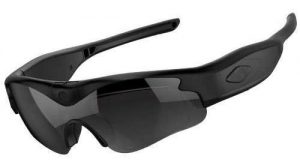
For people specifically interested in wearable video, daVideo camera sunglasses offer an alternative to buying multifunction smart glasses.
The appeal is straightforward.
They’re designed around the idea of having a camera with you while keeping your hands free.
For action-sports enthusiasts, travelers, hobbyists and content creators, that can be exactly what they need.
Instead of asking whether your glasses can perform dozens of smart functions, you can concentrate on whether they can capture the type of POV footage you actually want.
Don’t Forget About Safety
Camera glasses are a recording tool.
They should never become a distraction.
When participating in action sports, safety should always take priority over getting footage.
Use appropriate protective equipment.
Follow the rules of the activity.
Don’t operate equipment unsafely to capture a video.
And make sure the camera glasses don’t interfere with your normal vision or protective gear.
The best footage isn’t worth compromising your safety.
Final Thoughts
Action sports are difficult to record because you’re part of the action.
Your hands are busy.
You’re moving.
Your attention is elsewhere.
And the best moments often happen unexpectedly.
That’s exactly why dedicated camera glasses can make sense.
They give you a camera that travels with you.
They keep your hands available.
They capture your perspective.
And with a wide-angle lens, they can capture more of the environment around you.
Whether you’re mountain biking, skiing, snowboarding, skateboarding, hiking, fishing, kayaking, riding trails or simply exploring the outdoors, POV camera glasses can turn your experience into something you can watch again and share with others.
Smart glasses may be useful for people who want a wearable computer.
But if your goal is simpler:
You want to record the action from your point of view.
Dedicated camera glasses may be exactly the tool you’re looking for.
Frequently Asked Questions
Are camera glasses good for action sports?
They can be excellent for hands-free POV recording because the camera stays with you while your hands remain available for the activity.
What action sports can you record with camera glasses?
Depending on the activity and camera design, they can be used for activities such as mountain biking, skiing, snowboarding, skateboarding, hiking, fishing, kayaking, BMX, motocross and other outdoor activities.
Is a wide-angle lens important for action sports?
Yes. A wider field of view can capture more of the environment and provide additional framing flexibility when you’re moving quickly.
Are 110° camera glasses good for POV video?
A 110° field of view can be a useful choice for POV video because it provides broad coverage without necessarily being as extreme as some ultra-wide lenses.
Can I use camera glasses while skiing or snowboarding?
Potentially, but always make sure the glasses don’t interfere with your helmet, goggles, vision or other safety equipment. Check the manufacturer’s specifications and use appropriate protective equipment.
Are camera glasses better than an action camera?
Neither is universally better. Traditional action cameras offer excellent mounting flexibility, while camera glasses provide a natural hands-free perspective. They can also be used together.
Can camera glasses record while I’m riding a bike?
They can be used for hands-free recording while cycling, provided they don’t interfere with safe operation of the bicycle and comply with applicable laws and safety requirements.
Do I need smart glasses for action-sports POV video?
No. If your main goal is recording POV video, dedicated camera glasses can provide the recording functionality without requiring smart or AI features.
What should I look for when buying action-sports camera glasses?
Look at video resolution, field of view, frame rate, stabilization, battery life, storage, camera positioning, comfort and the camera’s suitability for the environment where you’ll use it.
Click here for the official daVideo Camera Sunglasses


Why Dedicated Camera Glasses Make Sense for Action Sports
Why Dedicated Camera Glasses Make Sense for Action Sports Action sports are all about movement. Whether you’re riding a mountain bike, skiing down a slope, skateboarding, snowboarding, kayaking, fishing, hiking, motocross riding or simply trying something new, the experience happens quickly. That creates a challenge for anyone who wants to record it. You can’t always hold a camera. You don’t always have time to set up a tripod. And you don’t necessarily […]
Why Physical Recording Controls Can Beat Voice Commands
Why Physical Recording Controls Can Beat Voice Commands Voice commands have become one of the most recognizable features of modern smart glasses. Being able to tell your glasses to take a picture, start recording or perform another function can feel futuristic. For many situations, voice control is genuinely useful. But when your primary goal is recording video, voice commands aren’t always the best way to control a camera. Sometimes, a simple physical […]
The Best Camera Glasses for Motorcycle Riders: What Should You Look For?
The Best Camera Glasses for Motorcycle Riders: What Should You Look For? Motorcycle riding is one of those activities that is incredibly difficult to capture from your own perspective. You can mount a camera to your motorcycle. You can attach an action camera to your helmet. You can have another rider follow you with a camera. But there is something different about recording exactly what you see while you’re riding. That’s where […]
Why Adjustable Camera Angles Matter in POV Camera Glasses
Why Adjustable Camera Angles Matter in POV Camera Glasses When people shop for POV camera glasses, they often focus on resolution. 1080p. 4K. Frame rate. Megapixels. Storage. Battery life. All of those specifications matter. But there’s another feature that can have a surprisingly big impact on your finished video: The angle of the camera. A camera can have excellent resolution, but if it’s pointed too high, too low or in the wrong […]
Why 128GB of Removable Storage Matters in Video Camera Sunglasses
Why 128GB of Removable Storage Matters in Video Camera Sunglasses When shopping for video camera sunglasses, it’s easy to focus on camera resolution. 1080p. 4K. Frame rates. Wide-angle lenses. Image stabilization. But there’s another specification that can be just as important: Storage. After all, what good is a camera that records great video if you quickly run out of space? For people who plan to record a lot of POV video, travel […]
Camera Glasses Without the AI: Why Simpler Can Be Better
Camera Glasses Without the AI: Why Simpler Can Be Better Smart glasses have become increasingly sophisticated. Some can answer questions, interact with your phone, provide voice assistance, take photos, record video, play audio, make calls and offer AI-powered features. That’s impressive technology. But there’s another question worth asking: Do you actually need all of those features if your main goal is recording video? For many people, the answer may be no. If […]
Why Pay for AI Features When You Just Want to Record Video?
Why Pay for AI Features When You Just Want to Record Video? AI is everywhere. It’s in smartphones, computers, cars, cameras, apps, search engines — and now, it’s becoming a major selling point for smart glasses. Modern smart glasses can offer impressive technology. Depending on the product, they may provide AI assistants, voice commands, object recognition, translations, questions and answers, smartphone integration, and other connected features. But there’s an important question consumers […]
daVideo vs. Meta Glasses: Which Is Better for Recording POV Video?
daVideo vs. Meta Glasses: Which Is Better for Recording POV Video? Point-of-view video has become one of the most engaging ways to record and share experiences. Instead of watching someone hold a camera from the outside, POV video puts the viewer directly into the action. Whether you’re traveling, walking through a new city, working on a project, attending an event, riding a bike, exploring outdoors, or creating social-media content, POV footage gives […]
110° Wide-Angle POV Video: Why Lens Coverage Matters
110° Wide-Angle POV Video: Why Lens Coverage Matters When you’re recording video from your own point of view, lens coverage matters just as much as video resolution. A camera mounted on your face doesn’t always point exactly where a traditional handheld camera would. Your head moves, your eyes move, and your body naturally changes position while you’re walking, working, traveling, or interacting with your surroundings. That’s why a 110° wide-angle POV camera […]
5 Reasons Dedicated Video Camera Sunglasses Beat Smart Glasses for Recording
5 Reasons Dedicated Video Camera Sunglasses Beat Smart Glasses for Recording Smart glasses have become one of the most talked-about wearable technologies. They can connect to your phone, play music, answer calls, provide voice assistance, and in some cases record photos and video. But if your main reason for buying glasses is recording video, do you really need a pair of smart glasses loaded with features you may never use? For many […]
Looking for a Meta Glasses Alternative? Consider Dedicated Camera Sunglasses
Looking for a Meta Glasses Alternative? Consider Dedicated Camera Sunglasses If you’ve been searching for Meta glasses alternatives, you may have noticed that many of today’s smart glasses are designed to do far more than simply record video. Modern Meta glasses combine cameras with features such as audio, microphones, AI, smartphone connectivity and other smart functions. For some people, that’s exactly what they want. But what if you don’t need all of […]
Why daVideo Camera Sunglasses Are Built for People Who Actually Want to Record
Why daVideo Camera Sunglasses Are Built for People Who Actually Want to Record There are plenty of smart glasses on the market today. Some can play music. Some can make phone calls. Some connect to your smartphone. Some offer AI assistants and other smart features. And many can record video. But there’s a big difference between glasses that happen to have a camera and camera sunglasses designed for people who actually want […]
Leave A Comment