The Best Camera Glasses for Motorcycle Riders: What Should You Look For?
Motorcycle riding is one of those activities that is incredibly difficult to capture from your own perspective.
You can mount a camera to your motorcycle. You can attach an action camera to your helmet. You can have another rider follow you with a camera.
But there is something different about recording exactly what you see while you’re riding.
That’s where camera glasses can be interesting for motorcycle riders.
A pair of video camera sunglasses can provide a hands-free way to capture POV footage while you’re riding, allowing the camera to follow your head instead of requiring you to hold or manually point a camera.
But not all camera glasses are equally suited for motorcycle riding.
If you’re shopping for the best camera glasses for motorcycle riders, there are several important features you should consider before buying.
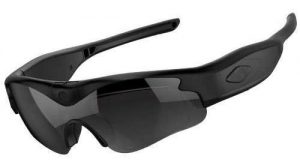
Click here for the official daVideo Camera Sunglasses
Why Motorcycle Riders Want POV Video
Motorcycle riding naturally lends itself to first-person video.
A traditional camera can show the motorcycle.
A camera mounted to another vehicle can show you riding.
But POV footage shows what you actually see from the motorcycle.
That can make the video much more immersive.
Your footage can show:
- The road ahead
- Curves
- Intersections
- Scenery
- Your hands
- The motorcycle controls
- Other riders
- Roadside attractions
- Stops and destinations
- The overall riding experience
For motorcycle vloggers and casual riders alike, POV footage can be an excellent way to preserve rides and create content.
What Makes Camera Glasses Different From a Helmet Camera?
Helmet-mounted action cameras are extremely popular among motorcyclists.
They’re also a great option.
But camera glasses provide a different perspective.
A helmet-mounted camera stays attached to the helmet.
Camera glasses move with your eyes and head.
If you turn your head toward something, the camera turns with you.
If you look toward a scenic view, the camera follows your perspective.
That can produce a more natural first-person recording.
Helmet camera:
The camera points where the helmet points.
Camera glasses:
The camera points where the glasses point.
Neither approach is universally better.
They simply provide different perspectives.
The First Thing to Look For: Camera Position
When choosing camera glasses for motorcycle riding, pay close attention to where the camera is located.
The camera should provide a natural perspective without interfering with your vision.
Ideally, the camera should be positioned so the footage represents a useful approximation of what you’re seeing while riding.
This is particularly important because motorcycle riders naturally move their heads.
You may look through a curve.
You may check your mirrors.
You may look toward another rider.
You may glance at something interesting beside the road.
The camera position can determine whether those movements produce useful footage or awkward framing.
Field of View Is Extremely Important
Motorcycle riding involves movement in a relatively large environment.
You aren’t simply looking at a stationary object directly in front of you.
You’re moving through the landscape.
That’s why field of view is an important specification.
A wider lens can capture more of the road and surrounding environment.
For example, a camera with approximately a 110° field of view can provide useful wide-angle coverage for POV recording.
That can help capture:
- More of the road
- More of the motorcycle
- More surrounding scenery
- Vehicles approaching from the side
- Curves
- Intersections
- Your hands and controls
The wider perspective can make motorcycle videos feel more immersive.
Why a Wide-Angle Lens Can Help Motorcycle Videos
Imagine you’re riding through a winding road.
Your motorcycle turns.
Your head naturally follows the curve.
A narrow camera may capture only a relatively small portion of the scene.
A wider lens provides more coverage.
That means you have more room for natural head movement without immediately moving your subject out of the frame.
A wide-angle lens can also make the road feel more expansive.
This can be especially effective for POV riding videos.
Don’t Automatically Choose the Widest Lens Possible
Wider isn’t always better.
Extremely wide lenses can introduce distortion around the edges.
Straight lines can appear curved, and objects near the edge of the frame may look stretched.
For motorcycle riding, you want a useful balance.
You want enough coverage to capture the road and environment while keeping the footage natural enough to watch.
That’s why something around 110° can be an attractive field of view for certain POV applications.
Always check the actual specifications of the camera you’re considering.
Video Resolution Matters
Motorcycle rides often contain a lot of detail.
Road markings.
Trees.
Buildings.
Signs.
Vehicles.
Scenery.
Roadside objects.
Higher video resolution can help preserve that detail.
When choosing camera glasses, look at the actual recording resolution supported by the model.
But don’t make the mistake of looking at resolution alone.
A high-resolution camera with poor framing isn’t necessarily going to produce better footage than a well-positioned camera with excellent coverage.
Think about the entire recording system.
Frame Rate Is Important for Moving Footage
Motorcycles move quickly.
That makes frame rate another specification worth considering.
Different cameras offer different recording modes and frame rates.
Higher frame rates can be useful for capturing smoother motion and may give you additional flexibility during editing.
For example, if you’re creating riding videos, smoother footage can make movement through curves and scenery more enjoyable to watch.
Check which resolutions and frame rates are actually available on the specific camera model you’re considering.
Stabilization Can Be Extremely Valuable
Motorcycles produce vibration.
The engine, road surface, wind and movement can all affect camera footage.
That’s why stabilization can be an important feature for motorcycle POV recording.
Electronic or optical stabilization, when available, can help reduce unwanted camera movement.
However, stabilization performance varies considerably between cameras.
Don’t assume that every camera with a stabilization feature performs the same way.
If you’re specifically buying camera glasses for motorcycle riding, stabilization should be one of the specifications you investigate.
Battery Life Matters on Long Motorcycle Rides
One of the easiest things to overlook is battery life.
You might start a two-hour ride with fully charged camera glasses.
If the battery only lasts part of the trip, you may miss some of the footage you wanted.
Think about how you actually ride.
Are you taking:
- 20-minute rides?
- One-hour rides?
- Half-day trips?
- Full-day motorcycle adventures?
- Multi-day road trips?
The longer the ride, the more important battery capacity becomes.
You should also consider whether you can recharge the camera during breaks.
Storage Is Just as Important
High-quality video consumes storage.
A long motorcycle ride can generate a surprising amount of footage.
That’s why storage capacity is an important consideration.
Removable microSD storage can be particularly convenient.
If your camera supports removable storage, you may be able to carry additional memory cards and swap them when necessary.
For example, you could have one card dedicated to a morning ride and another available for the afternoon.
Always verify the maximum supported card capacity and recording requirements for the exact camera model.
Why 128GB of Removable Storage Can Be Useful
If a camera supports up to 128GB of removable storage, that can provide substantially more flexibility for riders who record long sessions.
Instead of constantly worrying about running out of space, you can have more room for your footage.
Removable storage also makes transferring footage convenient.
You can remove the card and transfer your recordings to a compatible computer or other device.
For riders who record frequently, this can be a major practical advantage.
Audio Matters Too
Motorcycle videos aren’t only about what you see.
Sound can make a huge difference.
Engine sound.
Road noise.
Wind.
Conversation.
Environmental sounds.
All of these can affect the final video.
When choosing camera glasses, investigate how the camera records audio and where the microphones are located.
Keep in mind that motorcycle riding creates an extremely challenging audio environment.
Wind noise can be significant at riding speeds.
Even a good microphone can struggle when exposed directly to high-speed airflow.
For serious motorcycle vloggers, a dedicated audio setup may still be preferable.
But for casual POV recording, built-in audio can be useful for capturing the overall experience.
Don’t Forget About Wind Noise
Wind is one of the biggest challenges when recording from a motorcycle.
At higher speeds, the airflow around your face can be substantial.
That can overwhelm microphones.
This means that the best camera glasses for motorcycle riding aren’t necessarily the ones with the best microphone specifications on paper.
The microphone’s physical placement matters too.
If you’re planning to create professional motorcycle videos, consider how you’ll handle wind noise during editing or whether an additional audio solution is appropriate.
Comfort Becomes More Important on Long Rides
A pair of camera glasses may feel comfortable for ten minutes.
That’s not necessarily the same thing as wearing them for four hours.
Long-distance riders should pay attention to:
- Frame weight
- Nose comfort
- Ear pressure
- Lens size
- Overall fit
- Balance
- Compatibility with riding gear
Comfort matters because uncomfortable glasses are less likely to be used.
The best camera is the one you actually want to wear.
Camera Glasses and Motorcycle Helmets
This is one of the most important considerations.
Motorcycle riders should never compromise helmet safety to accommodate a camera.
Before using camera glasses with a helmet, make sure the combination doesn’t interfere with:
- Proper helmet fit
- Helmet straps
- Peripheral vision
- Eye protection
- Helmet movement
- Safe operation of the motorcycle
Depending on your helmet style, glasses may fit differently.
Full-face helmets, modular helmets, open-face helmets and half helmets can all present different challenges.
Test the combination while stationary before riding.
Don’t Let Camera Glasses Interfere With Your Vision
This should be obvious, but it’s worth emphasizing.
Your camera should never become a distraction.
Motorcycle riding requires constant attention.
You need to see:
- The road
- Traffic
- Signs
- Pedestrians
- Other motorcycles
- Vehicles
- Road hazards
- Curves
- Intersections
If the glasses interfere with your normal vision, they aren’t appropriate for riding.
Recording should always be secondary to safe operation.
Hands-Free Recording Is a Major Advantage
One of the strongest reasons to use camera glasses is that you don’t have to hold anything.
That’s particularly useful on a motorcycle.
Your hands need to control:
- Throttle
- Brakes
- Clutch
- Handlebars
- Turn signals
- Controls
A handheld camera simply isn’t an option while riding.
Camera glasses let you keep your hands where they belong while recording your perspective.
Don’t Adjust the Camera While Riding
This is another important safety principle.
Once you’re moving, don’t start changing camera settings, checking storage or troubleshooting the device.
Set everything up before you ride.
Check:
- Battery
- Storage
- Recording resolution
- Frame rate
- Camera angle
- Lens cleanliness
- Recording status
Then start recording before you begin riding.
Your attention should remain on the road.
Camera Glasses Are Great for Scenic Rides
Not every motorcycle video needs to be about speed.
Some of the most enjoyable motorcycle footage comes from scenic rides.
Imagine traveling along:
- Mountain roads
- Coastal highways
- Country roads
- Forest roads
- Historic routes
- Scenic byways
- Small towns
A wide-angle POV camera can capture both the road and the environment.
This gives viewers a sense of actually being on the motorcycle.
Great for Motorcycle Road Trips
Long-distance motorcycle trips create memories that are worth preserving.
Camera glasses can provide a continuous first-person record of the journey.
You can capture the ride from departure to destination.
Later, you can edit the footage into a highlight video.
You might combine:
- POV riding footage
- Traditional camera photos
- Drone footage where legally and safely operated
- Hotel footage
- Restaurant stops
- Scenic viewpoints
- Interviews
- Maps
The camera glasses provide the perspective that ties everything together.
Motorcycle Vlogging With Camera Glasses
Motorcycle vlogging has become increasingly popular.
But traditional motorcycle vlogging often requires considerable equipment.
You may need:
- Camera
- Helmet mount
- Microphone
- Audio recorder
- Batteries
- Memory cards
- Mounting hardware
- Power banks
Camera glasses can simplify the camera portion of the setup.
They won’t necessarily replace every piece of equipment a professional motorcycle vlogger needs.
But they can provide an easy way to capture POV footage without adding a large camera to your helmet.
Camera Glasses Can Capture More Natural POV Footage
When you mount a camera to a motorcycle or helmet, the camera has a fixed position.
Camera glasses provide something different.
Your perspective changes naturally.
If you look toward a scenic view, the camera moves with you.
If you look toward another rider, the camera follows.
If you look down at your controls, the camera can capture that movement.
This can make the footage feel more like the viewer is actually riding with you.
Dedicated Camera Glasses vs. Smart Glasses for Motorcycle Riders
Smart glasses can be attractive because they offer many additional features.
But motorcycle riders should think carefully about what they actually need.
| Feature | Dedicated Camera Glasses | Smart Glasses |
|---|---|---|
| POV video | Primary purpose | One of many functions |
| Hands-free recording | Yes | Yes |
| Wide-angle camera | Model dependent | Model dependent |
| AI features | Usually not the focus | Often available |
| Phone integration | Model dependent | Usually extensive |
| Audio features | Recording-focused | Often extensive |
| Simplicity | Generally higher | More complex |
| Recording-focused design | Yes | Not necessarily |
| Best for | Camera-first users | Users wanting smart functions |
If you’re primarily buying the glasses to record your motorcycle rides, a dedicated camera can be a logical choice.
If you want AI assistance, calls, music and connected smart features, smart glasses may make more sense.
Why You May Not Need AI for Motorcycle Video
You don’t need artificial intelligence to record a motorcycle ride.
The important things are:
- Camera quality
- Lens coverage
- Stabilization
- Frame rate
- Storage
- Battery
- Audio
- Comfort
AI might be useful for other purposes, but it doesn’t make the road more interesting.
The actual experience you’re recording is what matters.
That’s why dedicated camera glasses can appeal to riders who don’t want to turn their eyewear into another smart device.
Your Smartphone Can Handle the Smart Features
Most motorcycle riders already carry a smartphone.
It can handle:
- Navigation
- Calls
- Music
- Messaging
- Maps
- Internet access
- AI assistants
- Emergency communication
Your camera glasses don’t necessarily need to duplicate all of those functions.
They can have one simple job:
Capture the ride.
That can make for a more focused and straightforward setup.
What About Action Cameras?
Action cameras remain one of the best choices for motorcycle riders.
They’re rugged.
They’re highly mountable.
They can be positioned in many different locations.
And many models offer excellent stabilization.
So why consider camera glasses?
Because they provide a perspective that an action camera mounted to the bike may not.
An action camera might show:
The motorcycle and rider.
Camera glasses can show:
What the rider sees.
For the best possible motorcycle video, you can even use both.
A Two-Camera Motorcycle Setup
Consider this setup:
Camera 1: Mounted to the motorcycle or helmet.
Camera 2: Camera glasses recording POV.
Now you have two completely different angles.
During editing, you can switch between them.
Show the motorcycle from the outside.
Then cut to the rider’s perspective.
Then return to the external shot.
This can make a motorcycle video much more dynamic.
What About Rain?
This is another important consideration.
Motorcycle riders can encounter unexpected weather.
But you should never assume camera glasses are waterproof.
Check the manufacturer’s specifications for:
- Water resistance
- Waterproofing
- Rain protection
- Operating temperature
If the camera isn’t designed for wet conditions, don’t expose it to heavy rain.
Protecting your equipment is much easier than replacing it.
The Best Camera Glasses Depend on Your Riding Style
There isn’t one pair of camera glasses that’s perfect for every rider.
Your ideal setup depends on what you do.
Casual rider
You may prioritize simplicity, comfort and easy recording.
Motorcycle vlogger
You may prioritize resolution, frame rate, audio and storage.
Long-distance rider
Battery life and storage may be especially important.
Scenic rider
Wide-angle coverage and image quality may be your priorities.
Adventure rider
Durability, comfort and environmental resistance may matter most.
Think about how you actually ride before choosing your camera glasses.
A Simple Checklist for Motorcycle Camera Glasses
Before buying, ask these questions:
Does the camera provide the field of view I want?
Is the video resolution sufficient for my needs?
Does it offer an appropriate frame rate?
Does it have stabilization?
How long does the battery last?
How much storage does it support?
Does it use removable microSD storage?
How does it handle audio?
Will the glasses fit comfortably with my helmet?
Will they interfere with my vision?
Are they suitable for the weather conditions I expect?
Can I easily start recording before riding?
These questions are much more useful than simply asking which glasses have the most features.
Why daVideo Camera Sunglasses Can Be an Interesting Choice for Riders
For riders looking for a camera-first wearable, daVideo camera sunglasses are worth considering as an alternative to multifunction smart glasses.
The attraction is straightforward:
You’re buying them to record.
That makes camera-related specifications the priority.
You can focus on the things that actually affect your motorcycle footage:
- Field of view
- Video quality
- Camera position
- Storage
- Battery
- Recording simplicity
Rather than paying attention to a long list of smart features you may never use, you can concentrate on getting the footage you want.
Final Thoughts
The best camera glasses for motorcycle riders aren’t necessarily the ones with the most technology.
They’re the ones that fit the way you ride.
For many riders, the most important features are simple:
A good camera.
A useful field of view.
Reliable storage.
Good battery life.
Comfortable fit.
Easy recording.
A natural POV perspective.
A wide-angle camera, such as one with approximately a 110° field of view, can help capture more of the road and surrounding environment. Removable storage can make longer rides easier to record. Good battery life can keep the camera running throughout the trip. And a comfortable design makes it much more likely that you’ll actually wear the camera glasses.
Most importantly, camera glasses allow you to record while keeping both hands available for riding.
That’s the real appeal.
You don’t have to hold a camera.
You don’t have to constantly point a camera.
You don’t have to stop every few minutes to set something up.
You simply ride.
And your camera glasses can capture the journey from your perspective.
For motorcycle riders who want hands-free POV video, dedicated camera glasses can be a surprisingly practical way to record the ride.
Frequently Asked Questions
What are the best camera glasses for motorcycle riders?
The best camera glasses depend on your needs, but riders should generally look for good video quality, a useful field of view, stabilization, sufficient battery life, adequate storage, comfortable fit and easy recording.
Are camera glasses good for motorcycle POV video?
Yes. Camera glasses can provide a natural first-person perspective while keeping both hands available for operating the motorcycle.
Is 110° a good field of view for motorcycle camera glasses?
A 110° field of view can provide useful wide-angle coverage for motorcycle POV footage, capturing more of the road and surrounding environment than a narrower lens.
Are camera glasses better than a helmet camera?
Neither is automatically better. A helmet camera provides a fixed perspective, while camera glasses follow your head and can provide a more personal POV perspective.
Can I wear camera glasses under a motorcycle helmet?
It depends on the helmet and glasses. The combination should never compromise helmet fit, vision, eye protection or safety. Always test the combination while stationary before riding.
Do motorcycle camera glasses need stabilization?
Stabilization can be very useful because motorcycles experience vibration and movement. However, stabilization performance varies by camera, so check the specifications of the specific model.
How much storage do I need for motorcycle videos?
That depends on your recording resolution, frame rate and ride length. Riders who record long trips may benefit from higher-capacity or removable microSD storage if supported by the camera.
Are camera glasses waterproof?
Not necessarily. Never assume camera glasses are waterproof. Check the manufacturer’s specifications for water resistance before using them in rain or around water.
Can camera glasses record motorcycle engine sound?
They can record audio if the model includes a microphone, but motorcycle wind noise can make audio difficult at higher speeds. Riders creating professional videos may want a separate audio solution.
Do I need AI smart glasses to record motorcycle rides?
No. If your main goal is recording POV video, dedicated camera glasses can provide the camera functionality without requiring AI or other smart features.
Are camera glasses good for motorcycle vlogging?
They can be useful for motorcycle vloggers because they provide hands-free POV footage. They can also be combined with helmet-mounted, motorcycle-mounted or external cameras for multiple perspectives.
Click here for the official daVideo Camera Sunglasses


The Best Camera Glasses for Motorcycle Riders: What Should You Look For?
The Best Camera Glasses for Motorcycle Riders: What Should You Look For? Motorcycle riding is one of those activities that is incredibly difficult to capture from your own perspective. You can mount a camera to your motorcycle. You can attach an action camera to your helmet. You can have another rider follow you with a camera. But there is something different about recording exactly what you see while you’re riding. That’s where […]
Why Adjustable Camera Angles Matter in POV Camera Glasses
Why Adjustable Camera Angles Matter in POV Camera Glasses When people shop for POV camera glasses, they often focus on resolution. 1080p. 4K. Frame rate. Megapixels. Storage. Battery life. All of those specifications matter. But there’s another feature that can have a surprisingly big impact on your finished video: The angle of the camera. A camera can have excellent resolution, but if it’s pointed too high, too low or in the wrong […]
Why 128GB of Removable Storage Matters in Video Camera Sunglasses
Why 128GB of Removable Storage Matters in Video Camera Sunglasses When shopping for video camera sunglasses, it’s easy to focus on camera resolution. 1080p. 4K. Frame rates. Wide-angle lenses. Image stabilization. But there’s another specification that can be just as important: Storage. After all, what good is a camera that records great video if you quickly run out of space? For people who plan to record a lot of POV video, travel […]
Camera Glasses Without the AI: Why Simpler Can Be Better
Camera Glasses Without the AI: Why Simpler Can Be Better Smart glasses have become increasingly sophisticated. Some can answer questions, interact with your phone, provide voice assistance, take photos, record video, play audio, make calls and offer AI-powered features. That’s impressive technology. But there’s another question worth asking: Do you actually need all of those features if your main goal is recording video? For many people, the answer may be no. If […]
Why Pay for AI Features When You Just Want to Record Video?
Why Pay for AI Features When You Just Want to Record Video? AI is everywhere. It’s in smartphones, computers, cars, cameras, apps, search engines — and now, it’s becoming a major selling point for smart glasses. Modern smart glasses can offer impressive technology. Depending on the product, they may provide AI assistants, voice commands, object recognition, translations, questions and answers, smartphone integration, and other connected features. But there’s an important question consumers […]
daVideo vs. Meta Glasses: Which Is Better for Recording POV Video?
daVideo vs. Meta Glasses: Which Is Better for Recording POV Video? Point-of-view video has become one of the most engaging ways to record and share experiences. Instead of watching someone hold a camera from the outside, POV video puts the viewer directly into the action. Whether you’re traveling, walking through a new city, working on a project, attending an event, riding a bike, exploring outdoors, or creating social-media content, POV footage gives […]
110° Wide-Angle POV Video: Why Lens Coverage Matters
110° Wide-Angle POV Video: Why Lens Coverage Matters When you’re recording video from your own point of view, lens coverage matters just as much as video resolution. A camera mounted on your face doesn’t always point exactly where a traditional handheld camera would. Your head moves, your eyes move, and your body naturally changes position while you’re walking, working, traveling, or interacting with your surroundings. That’s why a 110° wide-angle POV camera […]
5 Reasons Dedicated Video Camera Sunglasses Beat Smart Glasses for Recording
5 Reasons Dedicated Video Camera Sunglasses Beat Smart Glasses for Recording Smart glasses have become one of the most talked-about wearable technologies. They can connect to your phone, play music, answer calls, provide voice assistance, and in some cases record photos and video. But if your main reason for buying glasses is recording video, do you really need a pair of smart glasses loaded with features you may never use? For many […]
Looking for a Meta Glasses Alternative? Consider Dedicated Camera Sunglasses
Looking for a Meta Glasses Alternative? Consider Dedicated Camera Sunglasses If you’ve been searching for Meta glasses alternatives, you may have noticed that many of today’s smart glasses are designed to do far more than simply record video. Modern Meta glasses combine cameras with features such as audio, microphones, AI, smartphone connectivity and other smart functions. For some people, that’s exactly what they want. But what if you don’t need all of […]
Why daVideo Camera Sunglasses Are Built for People Who Actually Want to Record
Why daVideo Camera Sunglasses Are Built for People Who Actually Want to Record There are plenty of smart glasses on the market today. Some can play music. Some can make phone calls. Some connect to your smartphone. Some offer AI assistants and other smart features. And many can record video. But there’s a big difference between glasses that happen to have a camera and camera sunglasses designed for people who actually want […]
Why You Don’t Need AI to Record Amazing POV Video
Why You Don’t Need AI to Record Amazing POV Video Artificial intelligence is everywhere. It’s built into smartphones, computers, cameras, search engines and increasingly into eyewear. Today’s smart glasses can do some impressive things. Depending on the model, they can answer questions, interact with AI assistants, play audio, make calls, connect to your smartphone and record photos and video. But here’s something worth remembering: You don’t need artificial intelligence to record great […]
Do You Really Need Smart Features in Your Camera Glasses?
Do You Really Need Smart Features in Your Camera Glasses? When shopping for camera glasses, it’s easy to get caught up in all the features. AI assistants. Voice commands. Phone calls. Speakers. Notifications. App connectivity. Bluetooth. Social media integration. And, of course, a built-in camera. Smart glasses have become increasingly sophisticated, and there’s no question that these features can be useful for some people. But here’s an important question to ask before […]
Leave A Comment