Meta Glasses or daVideo? Choosing the Right Glasses for POV Video
If you’re looking for a way to record hands-free, first-person video, you’ve probably come across two very different types of camera glasses: Meta smart glasses and dedicated daVideo camera sunglasses.
Both can give you a wearable way to capture video.
But they’re designed with different priorities in mind.
Meta glasses are built as multifunction smart glasses that combine a camera with features such as audio, connectivity and smart technology.
daVideo camera sunglasses take a more camera-focused approach.
So which one is right for POV video?
The answer depends on what you actually want your glasses to do.
If you’re looking for a smart wearable that happens to have a camera, Meta may be appealing.
If your main goal is to put on a pair of camera sunglasses and record, daVideo deserves a close look.
Let’s compare the two approaches.
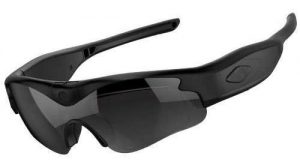
Click here for the official daVideo Camera Sunglasses
What Makes POV Video Different?
POV stands for point of view.
Instead of filming someone else from a distance, POV video records approximately what the person wearing the camera sees.
That makes wearable camera glasses particularly interesting.
Your perspective becomes the camera’s perspective.
If you turn your head, the camera follows.
If you walk forward, the camera moves with you.
If you look at something interesting, the camera is already positioned in approximately the same direction.
This can create a very different type of footage than holding a smartphone.
POV video is particularly useful for:
- Travel
- Walking tours
- Hiking
- Outdoor activities
- Automotive projects
- DIY projects
- Demonstrations
- Tutorials
- Hobbies
- Events
- Social media
- Everyday experiences
The big question is which type of glasses makes the most sense for the way you want to record.
Meta Glasses: More Than Just a Camera
Meta smart glasses are designed to be much more than wearable cameras.
That’s one of their biggest advantages.
Depending on the model and features available, smart glasses can combine camera functionality with things such as:
- Audio
- Speakers
- Microphones
- Phone calls
- Music
- Smartphone connectivity
- Voice commands
- AI features
- Photo capture
- Video recording
For someone who wants a multifunction wearable device, that’s extremely attractive.
You aren’t simply buying a camera.
You’re buying an entire smart-glasses experience.
But there’s an important trade-off.
If your primary goal is recording POV video, you may not need many of those additional features.
daVideo: A Camera-First Approach
daVideo takes a different approach.
The emphasis is on camera sunglasses and hands-free recording.
Instead of asking how many smart features can be packed into the glasses, the focus is on giving you a convenient wearable camera that can capture your perspective.
That makes daVideo particularly interesting for people who are thinking:
“I mainly want these glasses to record video.”
You may not need your sunglasses to make phone calls.
You may not need built-in music.
You may not need an AI assistant.
You may simply want to record.
And that’s where a dedicated camera approach makes a lot of sense.
Meta Glasses vs. daVideo for POV Video
Here’s the simplest way to think about the difference:
| Meta Glasses | daVideo Camera Sunglasses | |
|---|---|---|
| Primary concept | Smart glasses | Camera sunglasses |
| POV video | Yes | Yes |
| Hands-free recording | Yes | Yes |
| Camera | Yes | Yes |
| Smart features | Extensive | Limited/focused |
| AI | Available on applicable models | Not the primary focus |
| Speakers | Yes on applicable models | Model dependent |
| Phone calls | Yes on applicable models | Not the primary purpose |
| Music | Yes | Not the primary purpose |
| Smartphone integration | Important part of experience | Model dependent |
| Camera-first design | No | Yes |
| Best suited for | Smart wearable users | Recording-focused users |
Neither product is automatically the winner.
They’re simply designed around different priorities.
If You Want AI, Meta May Be the Better Choice
Let’s start with where Meta has an obvious advantage.
If you want your glasses to do more than record, smart glasses can be very appealing.
You may want to:
- Ask questions
- Use voice commands
- Listen to music
- Make phone calls
- Interact with your smartphone
- Use AI-powered features
- Record photos and video
- Use the glasses as a connected wearable
If those features are important to you, then paying for a multifunction smart-glasses platform can make sense.
You’re getting more than a camera.
You’re getting a wearable technology device.
If You Mainly Want POV Video, daVideo May Make More Sense
Now let’s look at the opposite situation.
Suppose your priority list looks like this:
1. Record POV video
2. Keep my hands free
3. Capture my perspective
4. Keep things simple
5. Get a wearable camera
6. Don’t pay for features I won’t use
That’s a very different shopping list.
In that situation, dedicated camera sunglasses can be extremely appealing.
You aren’t looking for your glasses to become another smart device.
You want them to become your camera.
That’s where daVideo fits.
The Biggest Question: What Are You Actually Buying?
Before choosing between Meta and daVideo, ask yourself one question:
“What do I want these glasses to do?”
If the answer is:
“I want a smart device that can record video,”
then Meta glasses may be the better fit.
If the answer is:
“I want glasses that let me record video hands-free,”
then dedicated camera sunglasses deserve serious consideration.
That distinction can save you money and help you buy the product that actually matches your needs.
POV Video Doesn’t Require a Smart Assistant
One common misconception is that you need the latest smart technology to create great POV footage.
You don’t.
POV video existed long before AI-powered glasses.
What makes POV video interesting is the perspective.
The camera is attached to the person.
That’s the important part.
You don’t need artificial intelligence to walk through a beautiful location.
You don’t need an AI assistant to work on a car.
You don’t need voice commands to demonstrate a tool.
You don’t need smart notifications to record a hike.
You simply need a camera.
And if that camera is mounted in your sunglasses, you have a convenient way to capture your point of view.
Your Smartphone Already Has AI
There’s another reason some people may not need AI built into their glasses.
You probably already have a smartphone.
And modern smartphones can handle an enormous range of smart functions.
Your phone can:
- Use AI apps
- Edit video
- Organize photos
- Translate
- Search the web
- Make calls
- Play music
- Run social media
- Edit videos
- Store your footage
- Upload content
So if you’re primarily buying glasses because you want a camera, you may not need to duplicate all those capabilities in your sunglasses.
Your glasses can simply handle the recording.
Your phone can handle everything afterward.
daVideo Can Keep the Recording Setup Simple
There’s something to be said for simplicity.
The more features a device has, the more complicated the overall experience can become.
Smart devices can involve:
- Apps
- Accounts
- Bluetooth
- Wireless connections
- Updates
- Permissions
- Smartphone compatibility
- Settings
For people who enjoy technology, that’s not necessarily a problem.
But if you just want to record, simplicity can be an advantage.
A camera-focused pair of sunglasses can make the process feel much more straightforward.
Put them on.
Start recording.
Go about your activity.
That’s the appeal.
Which Is Better for Travel?
Both can be useful for travel.
But the better choice depends on what you want to do with them.
Choose Meta if:
You want your glasses to help you stay connected while traveling.
You may want music, calls, AI features and other smart functions along with the camera.
Consider daVideo if:
Your primary goal is capturing the trip.
Imagine walking through:
- New York City
- Las Vegas
- Disney parks
- National parks
- European cities
- Beaches
- Museums
- Tourist attractions
You can capture your perspective without constantly holding a phone.
That’s what makes wearable cameras so useful for travelers.
Which Is Better for Hobbies?
This is another area where camera sunglasses can shine.
Consider hobbies where your hands are constantly occupied.
For example:
Automotive
Working on an engine or repairing a vehicle can be difficult to film with a handheld camera.
DIY
Both hands may be needed to complete the project.
Woodworking
You don’t want to hold your phone while operating tools.
Fishing
You may want to capture the experience without constantly handling a camera.
Hiking
You can record your surroundings while keeping your hands available.
Repairs
POV footage can show viewers exactly what you’re seeing while making a repair.
These are situations where the camera itself is more important than the smart features surrounding it.
Which Is Better for Social Media?
Both can be useful for social media.
The right choice depends on what you’re creating.
If you’re creating content that benefits from AI, voice interaction or connected features, Meta may be attractive.
If you’re primarily looking for POV footage, dedicated camera sunglasses can give you another tool for your content creation.
POV videos can be especially effective because they put the viewer in the creator’s perspective.
Instead of watching someone work on a project, the viewer can experience approximately what the creator is seeing.
That’s a powerful format for short-form video.
Which Is Better for Everyday Recording?
This is where personal preference becomes important.
Some people want their glasses to be a wearable computer.
Others simply want a wearable camera.
If you’re the second type of person, dedicated camera sunglasses can make a lot of sense.
You don’t necessarily need to use them every day.
You might only put them on when you know you’re going somewhere interesting.
You can use them when you want to record.
Then take them off when you’re finished.
There’s no requirement to use every feature of a smart device just because it’s available.
What About Video Quality?
When comparing camera glasses, don’t simply look at the brand name.
Look at the actual camera specifications and recording capabilities of the particular model.
Important factors include:
- Resolution
- Frame rate
- Lens
- Field of view
- Stabilization
- Exposure
- Audio
- Storage
- Battery life
- Recording time
These factors can have a much bigger impact on your footage than whether the glasses have AI.
A smart assistant won’t fix poor lighting.
AI won’t automatically create the perfect composition.
And additional smart features don’t replace a camera designed to capture the footage you want.
Don’t Buy More Technology Than You Need
This is perhaps the most important consideration.
Modern technology encourages us to buy products based on how many things they can do.
But more isn’t always better.
If you want:
Camera + AI + speakers + phone + music + assistant + connectivity
then smart glasses may be exactly what you’re looking for.
But if you want:
Camera + sunglasses + hands-free recording
why pay for everything else?
That’s the question worth asking before you buy.
Meta Glasses or daVideo? Use This Simple Rule
Here’s an easy way to decide.
Choose Meta glasses if you want:
- A multifunction smart wearable
- AI features
- Voice interaction
- Music
- Phone calls
- Smartphone integration
- Camera recording
- A connected glasses experience
Choose daVideo if you want:
- Dedicated camera sunglasses
- Hands-free video recording
- POV footage
- A camera-first approach
- Simplicity
- A wearable recording device
- A solution focused on capturing video
Neither choice is wrong.
The right choice depends on what you actually want to accomplish.
Why daVideo Is Worth Considering for POV Video
The biggest advantage of dedicated camera sunglasses is focus.
The product doesn’t have to do everything.
It just needs to do the things you bought it for.
For someone who wants to capture POV footage, that’s an important distinction.
You aren’t necessarily looking for another smart device.
You’re looking for a camera you can wear.
That’s exactly the category daVideoCamera.com focuses on.
The Bottom Line
So, Meta glasses or daVideo?
If you want a highly connected pair of smart glasses that can do much more than record video, Meta may be the better choice.
But if you’re primarily interested in POV video, hands-free recording and a camera-focused experience, daVideo camera sunglasses may be the better fit.
The most important thing is to decide what you’re actually buying.
Are you buying:
Smart glasses with a camera?
Or are you buying:
Camera sunglasses that you can wear?
If recording is your priority, start with the camera.
Explore daVideo camera sunglasses at daVideoCamera.com and discover a simple way to capture your point of view hands-free.
Frequently Asked Questions
Are Meta glasses good for POV video?
Yes. Camera-equipped Meta glasses can be used for hands-free POV video and offer the advantage of combining recording with other smart features.
Are daVideo camera sunglasses good for POV video?
Yes. Dedicated camera sunglasses are designed specifically around hands-free recording and can provide a natural first-person perspective.
Which is better, Meta glasses or daVideo?
It depends on what you want. Meta is better suited to people who want a multifunction smart wearable. daVideo is designed for people who primarily want camera sunglasses for hands-free recording.
Do daVideo camera sunglasses have AI?
AI is not the primary purpose of daVideo camera sunglasses. They are focused on camera recording rather than trying to combine a camera with a large collection of smart features.
Do I need AI to make POV videos?
No. POV video is primarily about perspective and recording. Camera quality, lighting, composition, movement and subject matter are much more important to the finished footage.
Why use camera sunglasses instead of a phone?
A phone usually needs to be held or positioned somewhere. Camera sunglasses let you capture video while keeping your hands available for whatever you’re doing.
Are camera sunglasses good for travel?
Yes. They can be useful for recording walks, sightseeing, outdoor adventures and other travel experiences without requiring you to hold a camera throughout the activity.
Click here for the official daVideo Camera Sunglasses


Meta Glasses or daVideo? Choosing the Right Glasses for POV Video
Meta Glasses or daVideo? Choosing the Right Glasses for POV Video If you’re looking for a way to record hands-free, first-person video, you’ve probably come across two very different types of camera glasses: Meta smart glasses and dedicated daVideo camera sunglasses. Both can give you a wearable way to capture video. But they’re designed with different priorities in mind. Meta glasses are built as multifunction smart glasses that combine a camera with […]
UV400 Protection and Video Recording: What to Look for in Camera Sunglasses
UV400 Protection and Video Recording: What to Look for in Camera Sunglasses When people shop for video camera sunglasses, they often focus on camera specifications. How many megapixels does the camera have? What resolution does it record? How wide is the field of view? How much storage does it support? How long does the battery last? Those are all important questions. But there is another feature that should be near the top […]
Why Vibration Recording Alerts Matter When You’re Wearing Camera Glasses
Why Vibration Recording Alerts Matter When You’re Wearing Camera Glasses When you’re using a traditional camera, it’s usually easy to see what’s happening. You can look at the screen. You can see the recording indicator. You can hear a confirmation sound. But camera glasses are different. When you’re wearing a camera on your face, you can’t necessarily see the camera itself while you’re using it. You may not have a screen directly […]
daVideo vs. Meta Glasses: 15 Reasons to Consider Dedicated Video Camera Sunglasses
daVideo vs. Meta Glasses: 15 Reasons to Consider Dedicated Video Camera Sunglasses If you’re shopping for camera glasses, you’ve probably come across Meta glasses. They’re one of the best-known smart-glasses products on the market, combining a camera with features such as audio, smartphone connectivity, voice interaction, and other smart capabilities. But there’s another category worth considering: dedicated video camera sunglasses. Instead of trying to turn glasses into an all-purpose smart device, dedicated […]
Why Dedicated Camera Glasses Make Sense for Action Sports
Why Dedicated Camera Glasses Make Sense for Action Sports Action sports are all about movement. Whether you’re riding a mountain bike, skiing down a slope, skateboarding, snowboarding, kayaking, fishing, hiking, motocross riding or simply trying something new, the experience happens quickly. That creates a challenge for anyone who wants to record it. You can’t always hold a camera. You don’t always have time to set up a tripod. And you don’t necessarily […]
Why Physical Recording Controls Can Beat Voice Commands
Why Physical Recording Controls Can Beat Voice Commands Voice commands have become one of the most recognizable features of modern smart glasses. Being able to tell your glasses to take a picture, start recording or perform another function can feel futuristic. For many situations, voice control is genuinely useful. But when your primary goal is recording video, voice commands aren’t always the best way to control a camera. Sometimes, a simple physical […]
The Best Camera Glasses for Motorcycle Riders: What Should You Look For?
The Best Camera Glasses for Motorcycle Riders: What Should You Look For? Motorcycle riding is one of those activities that is incredibly difficult to capture from your own perspective. You can mount a camera to your motorcycle. You can attach an action camera to your helmet. You can have another rider follow you with a camera. But there is something different about recording exactly what you see while you’re riding. That’s where […]
Why Adjustable Camera Angles Matter in POV Camera Glasses
Why Adjustable Camera Angles Matter in POV Camera Glasses When people shop for POV camera glasses, they often focus on resolution. 1080p. 4K. Frame rate. Megapixels. Storage. Battery life. All of those specifications matter. But there’s another feature that can have a surprisingly big impact on your finished video: The angle of the camera. A camera can have excellent resolution, but if it’s pointed too high, too low or in the wrong […]
Why 128GB of Removable Storage Matters in Video Camera Sunglasses
Why 128GB of Removable Storage Matters in Video Camera Sunglasses When shopping for video camera sunglasses, it’s easy to focus on camera resolution. 1080p. 4K. Frame rates. Wide-angle lenses. Image stabilization. But there’s another specification that can be just as important: Storage. After all, what good is a camera that records great video if you quickly run out of space? For people who plan to record a lot of POV video, travel […]
Camera Glasses Without the AI: Why Simpler Can Be Better
Camera Glasses Without the AI: Why Simpler Can Be Better Smart glasses have become increasingly sophisticated. Some can answer questions, interact with your phone, provide voice assistance, take photos, record video, play audio, make calls and offer AI-powered features. That’s impressive technology. But there’s another question worth asking: Do you actually need all of those features if your main goal is recording video? For many people, the answer may be no. If […]
Why Pay for AI Features When You Just Want to Record Video?
Why Pay for AI Features When You Just Want to Record Video? AI is everywhere. It’s in smartphones, computers, cars, cameras, apps, search engines — and now, it’s becoming a major selling point for smart glasses. Modern smart glasses can offer impressive technology. Depending on the product, they may provide AI assistants, voice commands, object recognition, translations, questions and answers, smartphone integration, and other connected features. But there’s an important question consumers […]
daVideo vs. Meta Glasses: Which Is Better for Recording POV Video?
daVideo vs. Meta Glasses: Which Is Better for Recording POV Video? Point-of-view video has become one of the most engaging ways to record and share experiences. Instead of watching someone hold a camera from the outside, POV video puts the viewer directly into the action. Whether you’re traveling, walking through a new city, working on a project, attending an event, riding a bike, exploring outdoors, or creating social-media content, POV footage gives […]
Leave A Comment